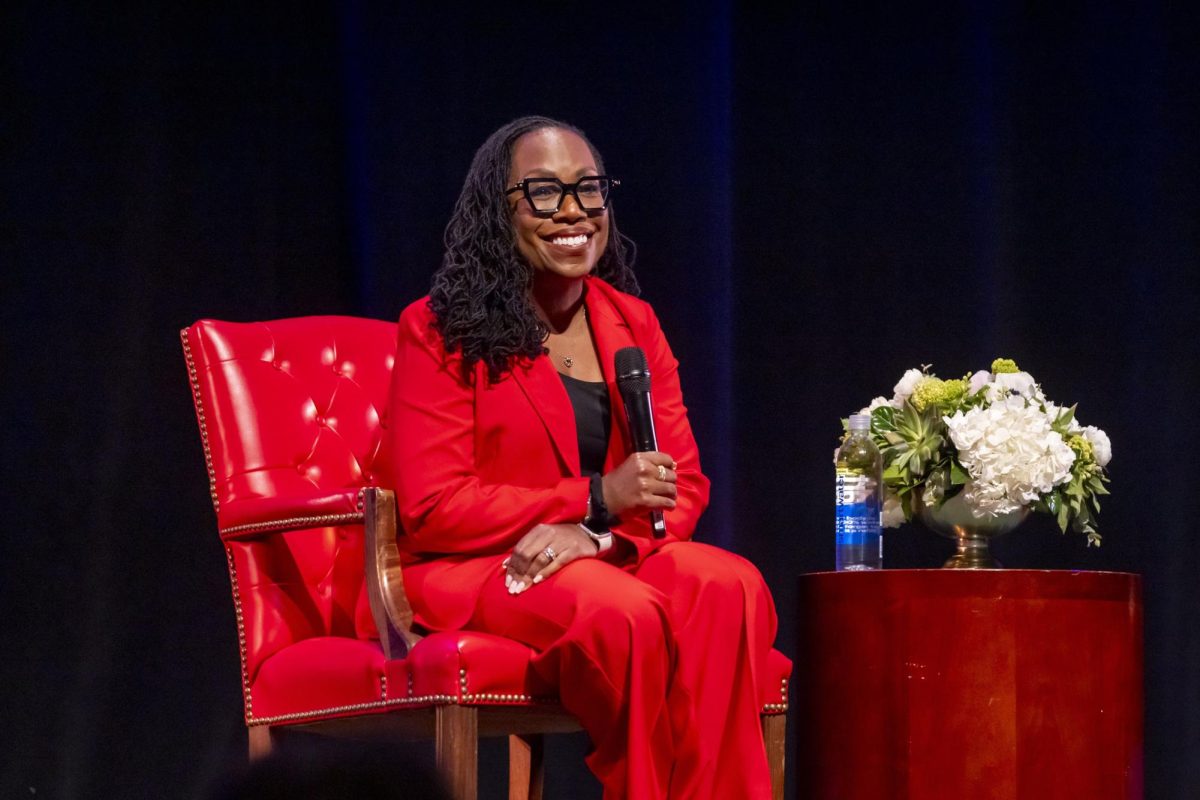



Disabled actors are able to shine when their needs are met, “Wicked” star and disability rights activist, Marissa Bode, said at the Anita and Truman Arnold Tate Lecture on Feb. 3 in McFarlin Auditorium at Southern Methodist University.
Visiting Texas for the first time, Bode spoke to various attendees at the Tate Lecture about growing up in the small town of Mazomanie, Wisconsin, where her love of acting began when she joined community theater, like her older brother.
After a car accident on the way to an audition left her disabled at the age of 11, Bode’s dream of becoming an actress seemed out of reach. A visit from the musical’s director proved that wrong.
“She was somebody who was like, ‘Yeah, I don’t see why you can’t continue,’” Bode said. “So we did the show in the hospital lobby, and in terms of adaptability, I think something that she showed me was, it shouldn’t be too hard to adapt either.”
In college, she became more comfortable asking for accommodations.
“Possibly I’m the first disabled person coming in this space, but I don’t think I’ll be the last,” Bode said.

She rose to fame after her performance as Nessarose in the “Wicked” duology, which boosted her platform and helped her advocacy reach more people. Her impact was reflected in the audience, which was filled with fans of the movies alongside SMU students, faculty, alumni and community members.
She was chosen as a lecturer because her role in these movies could bring in a younger audience, Max Keating, Student Foundation Tate Lecture chair, said.
“I think one of the things that makes her so unique to our other speakers is she’s in such a new piece of media that’s so popular with our generation, younger generation,” Keating said.
As expected, “Wicked” was a hot topic at the lecture. Bode brought up how amazed she was that all the sets were built and used very little blue screen. She added that they looked so real that even ducks flew in and resided on the lake. She also talked about the costumes, including a small but stunning detail of the red shoes’ heels being spirals to symbolize the tornado.
In response to a fan asking if she had stolen anything from the sets during the Q&A, Bode reminisced about the day she learned she got the role.
“He [the director] opens the door, and it’s Ari and Cynthia, and they have a little sign that says ‘Welcome to Oz,’” Bode said, which caused a rise of “awws” and applause from the audience.
Once the curtains closed, the high energy from the auditorium flowed to the lobby as people raved about the lecture.
Steven Raab, an SMU alumnus, was delighted by her enthusiasm.
“I felt like she was just really there and was happy to be part of the conversation,” Raab said.
Rebecca Hall, a fan of “Wicked,” was inspired by her activism. She strives to do the same work for accessibility rights at church.
“I think her perspective about her presence made it better for everybody and made it a better experience for all is really encouraging to me in the work that I do,” Hall said.
Many left with the same sentiment Bode has about people with disabilities getting the chance to perform.
“This is adapting and creating, creating an art that may have looked a little bit different in your brain, initially,” Bode said. “The outcome of the product will always be beautiful because that’s how art works.”