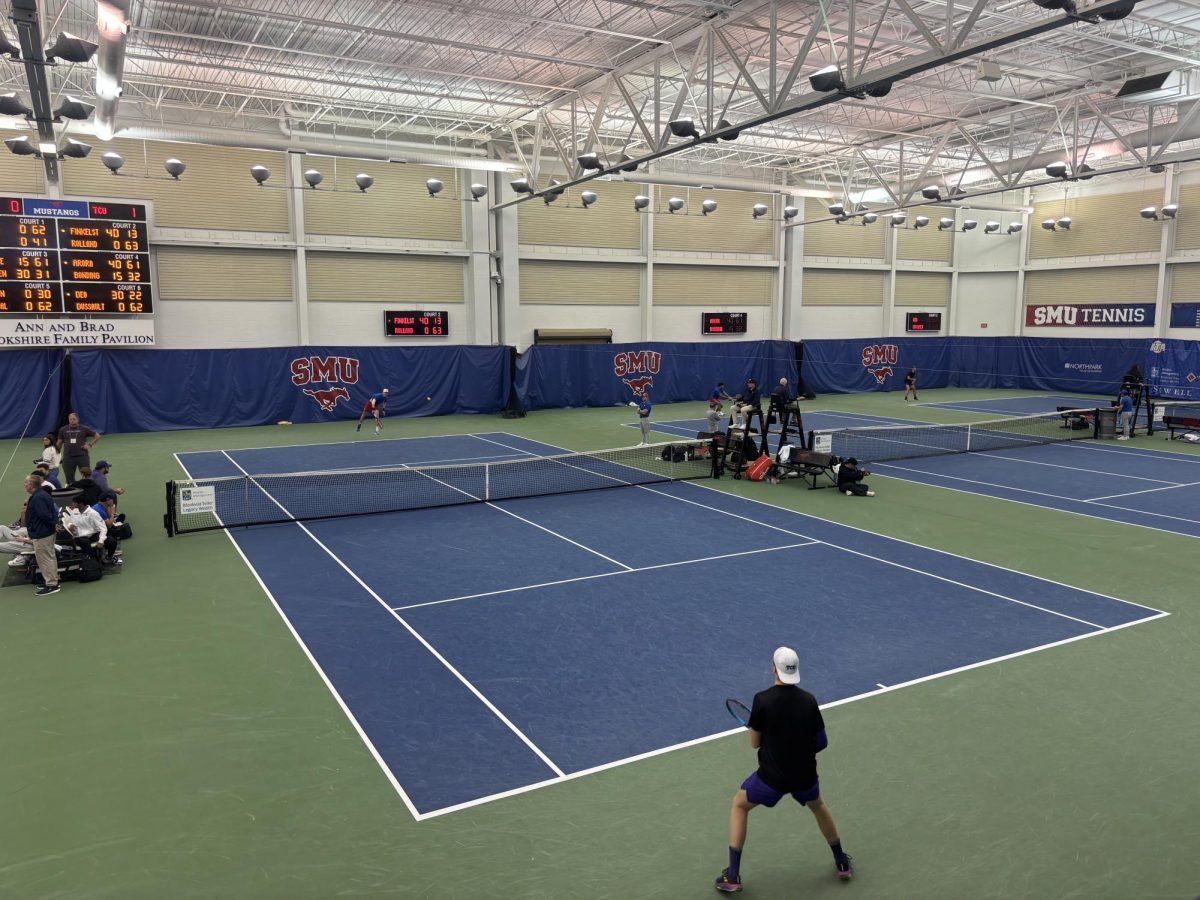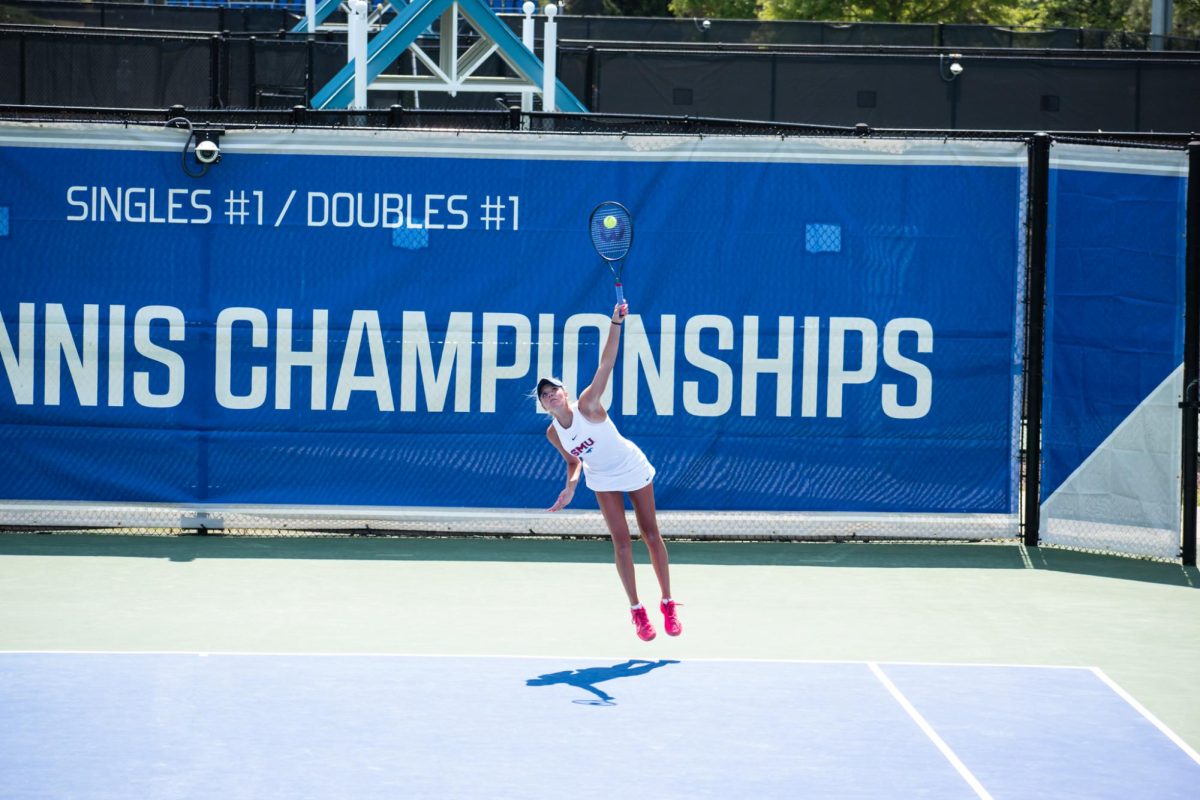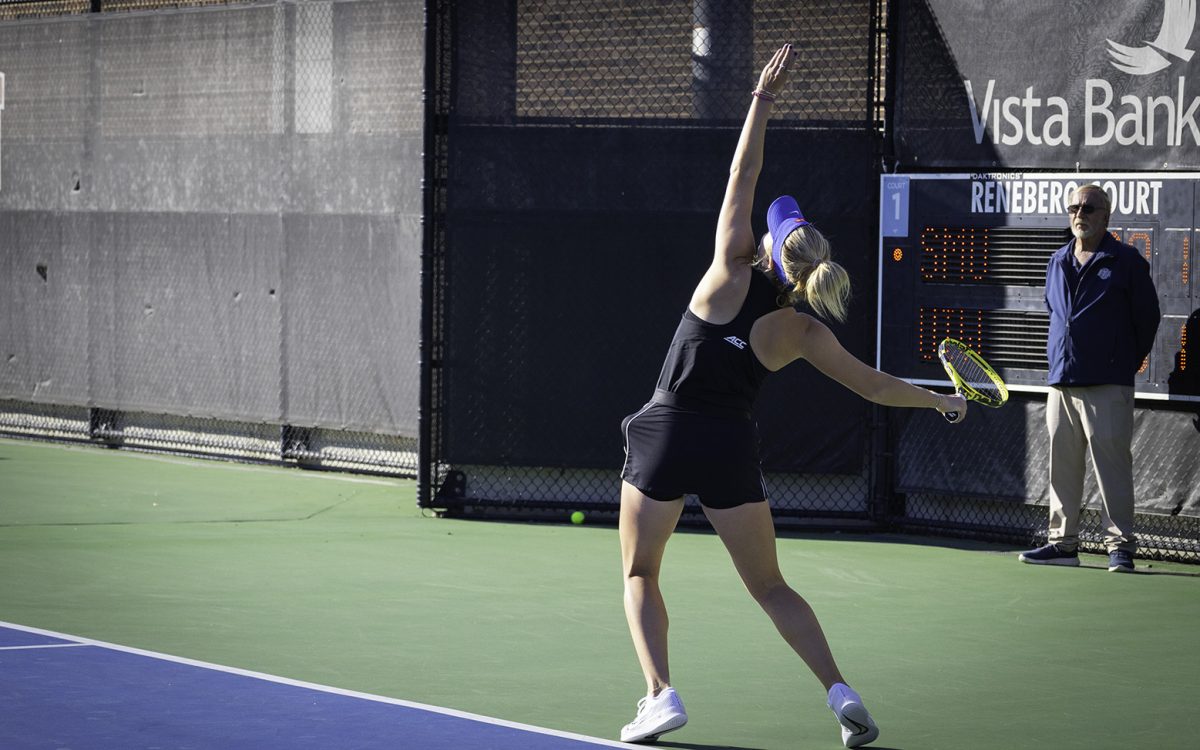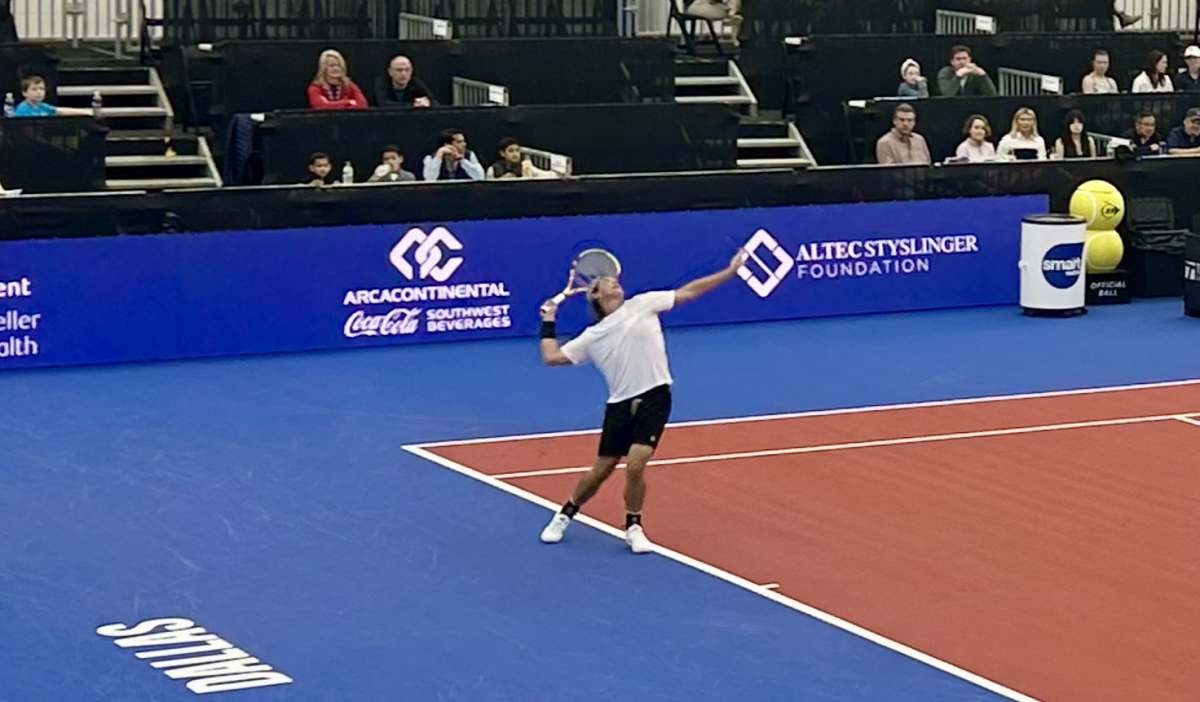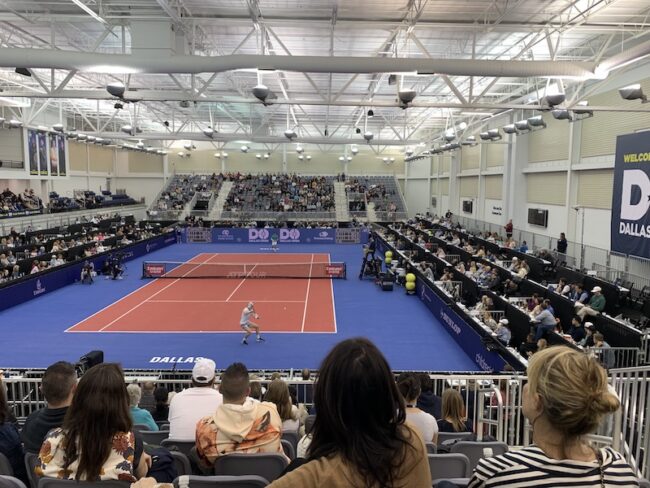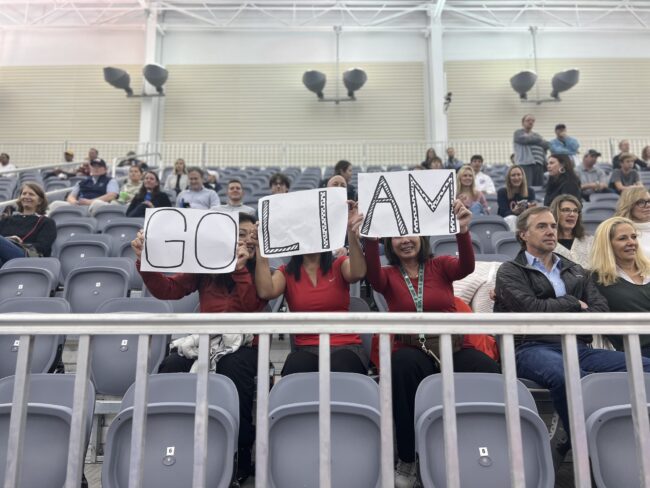



When Georgi Georgiev steps onto the court for SMU Tennis, he pictures his father in the stands. It doesn’t matter that his father is thousands of miles away in Bulgaria; Georgiev has learned to carry that presence with him anyway, imagining the cheers that can’t travel across the Atlantic.
A few courts over, Addison Comiskey is navigating her own version of the same balancing act. The freshman from Montreal, Canada, swapped the individualized training pipelines of Tennis Canada’s national federation for something she had never experienced before: a team.
“There’s pretty much nowhere in the world besides the U.S. where you can play almost professionally, have all the resources you need, while also getting a strong degree,” Georgiev said.
Together, Georgiev and Comiskey represent a growing wave of international talent quietly grinding it out in the NCAA — a pathway that remains severely undercovered despite the sacrifices it demands. International athletes make up nearly 5% of all collegiate athletes, and tennis is one of the sports driving that percentage up. College tennis offers something the professional junior circuit largely cannot: structure, community and time.
But getting here and staying here requires leaving almost everything familiar behind.
Georgiev, a sophomore from Svilengrad, Bulgaria, wasn’t even certain he was coming to Dallas until the summer before his freshman year. The decision to cross an ocean for college tennis wasn’t one he made lightly, and his parents shared the anxiety.
“It definitely wasn’t an easy decision,” Georgiev said. “Obviously, my parents were a little worried about how I’m going to adjust, because you can’t compare Eastern Europe to America.”
He had a nudge from an unexpected corner. Grigor Dimitrov, the Bulgarian star who reached No. 3 in the world on the ATP Tour in 2017, is a close family friend whose father coached Georgiev. It was Dimitrov who pointed him toward collegiate tennis.
“He said, ‘You should go there. It’s a great place to be, and it’s definitely gonna help you get better,’” Georgiev said.
That European background has translated on the court, according to his teammates. Noah McDonald, who has become one of Georgiev’s closest friends at SMU, said the experience sets him apart.
“He’s had the opportunity to travel and play tournaments all over Europe, which many American players have not, so he’s seen a lot of different styles and a lot of different players and played in lots of different conditions,” McDonald said.
Comiskey’s path had its own twists. She spent her final three years before college doing online school while training with the Canadian national federation: a hyper-individualized environment where sessions revolved entirely around her development. When she arrived at SMU, the adjustment wasn’t just geographic.
“Back in Canada, it was very individualized. Everything was kind of just focused on me,” Comiskey said. “Here it’s a lot more about the team and the culture around that and playing for something bigger than yourself.”
That shift hasn’t been lost on her teammates. Elena Mireles, who plays alongside Comiskey on the women’s squad, said the transition looked seamless from the outside.
“I wouldn’t have guessed that she wasn’t from the states,” Mireles said. “Addie’s always hyping other people up. I would have never guessed that she’s international, just by the way she acts and talks.”
The daily grind leaves little room for anything else. On a typical week, Comiskey is on the court by 8 a.m. for an hour of individual work before team practice runs until noon. Classes fill the afternoon. Mandatory tutoring is scheduled twice a week. On weekends, there are matches, and the travel schedule does not bend for class.
“Managing both athletics and academics is a lot,” Comiskey said. “A lot of people are going out, and I don’t really get the chance to do that. But I’m used to it now.”
Georgiev described a similar rhythm, compounded by the culture shock of discovering just how seriously Americans treat college athletics. The investment—including the staff, the facilities and the attention—stunned him when he first arrived.
“How much people value athletes here is pretty crazy to me,” Georgiev said. “I feel like college tennis should have higher viewing, closer to actual pro tennis. It’s very engaging and entertaining.”
Both players came to SMU with professional ambitions still simmering. Georgiev sees his college career as a clear stepping stone, noting that more top junior players around the world are choosing the NCAA route precisely because of the resources and daily competition it provides. Back in Bulgaria, he says, there simply weren’t enough hitting partners to push him the way 10 teammates can.
Comiskey is taking the long view. Four years is enough time for her to know whether the pro tour is in the cards.
“If my level is there as I keep going in college, then I would like to pursue a professional career,” Comiskey said. “I’m starting to believe in myself more. I think that’s definitely with the help of the team and the coaches.”
For now, Georgiev still does what he’s always done when the pressure builds on court. He imagines his father watching from somewhere in the stands, and he plays like he owes something to everyone back home who believed in him before he believed in himself.