


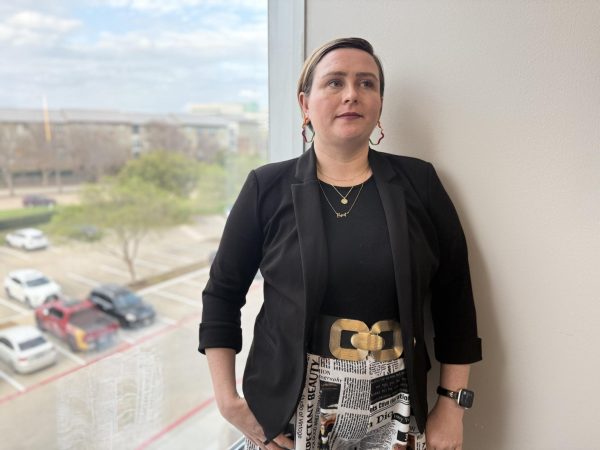
DALLAS – The call came in at 8:48 a.m. Her client was being detained. Immigration attorney Amanda Doom had seven-and-a-half hours to petition for her client to stay in the United States before she was sent to a Department of Homeland Security detention center.
Doom says that normally she can call the immigration officer and explain her client’s situation, and the officer will release them to go home. This allows Doom multiple days to present her client’s case while they wait in the comfort of their home.
Now, under new policies enacted by the Trump administration, Immigration and Customs Enforcement and border patrol agents are no longer afforded discretion to accommodate individual’s needs. Doom and other immigration attorneys must race against the clock to file the right paperwork for their client’s release.
Organizations such as the League of United Latin American Citizens link a recent rise in hate crimes against Latinos and other groups to aggressive laws and policing of immigrant communities. The United Nations says speeches by Trump and other politicians heightened human rights violations against asylum seekers.
Yet Trump and other top Republicans say the policies are necessary to stop illegal immigration and protect American citizens.
For attorneys like Doom, the problem comes down to discretion.
“We want that because we recognize the world is not black and white,” Doom says. “We recognize there are specifics that pertain to each situation…But unfortunately, my experience reflects that under the current administration that discretion has been stripped away.”
The immigration process varies based on who is in the White House. Immigration court is not within the independent judicial branch but falls under the executive branch agency of the Department of Homeland Security. This allows each president to directly influence how the immigration process works by rewriting policy and approving staff.
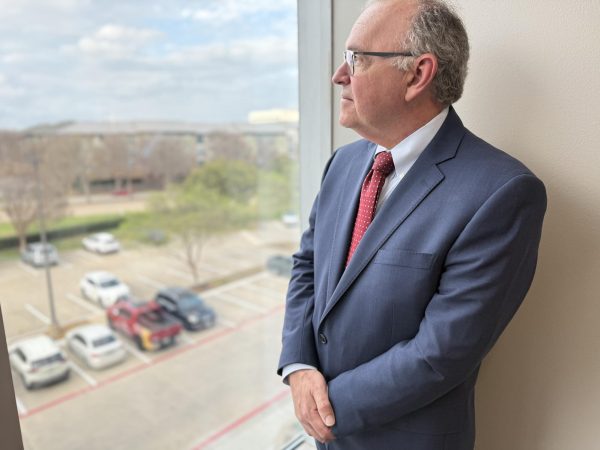
President Donald Trump has issued nine executive orders regarding immigration policies and removed more than one hundred immigration judges. Former Deputy Chief Immigration Judge Dan Weiss says he has never seen something like this before.
“Having done a good job in your position for years and years meant nothing,” Weiss says. “And then an administration can just come in and fire you for any reason or no reason at all.”
The Trump administration is implementing these policies because Americans deserve “a Government that understands its sacred obligation to prioritize the safety, security and financial and economic well-being of Americans,” according to the executive order.
* * *
Weiss says that typically when a person arrives at the United States border and they do not have legal documentation, they are immediately put into expedited removal, meaning they do not see a judge and are returned to their country of origin.
The only way to get out of the expedited removal process is to claim a fear of returning to the home country. Then, border patrol or ICE officers use their discernment to find out if there is a credible fear factor.
For example, Doom once worked with a little boy who had to escape his home country when a gang robbed his dad’s store and shot him. Later when he was in the hospital, they tried to kill him again. She even remembers him pulling up his shirt to show his scar.
If the immigration officer determines the person has a credible claim to fear, they are moved into what’s known as “240 proceedings.” This allows them to enter the U.S. with a court date where they will present their case to legally stay in the country.
However, an executive order signed by Trump in January 2025 allocates “sole and unreviewable discretion” for those kinds of cases to the Secretary of Homeland Security “to ensure efficient and expedited removal of aliens from the United States.”
The executive order also limits the amount of asylum requests that can be granted. Asylum immigration was implemented in the U.S. after World War II to help protect people escaping persecution.
Today, these limits affect individuals in “high-risk” countries in Africa, the Middle East, and parts of Asia, since all immigration requests from these countries have been put on hold, forcing people to stay in dangerous situations.
Now that immigration officers and judges must seek approval for moving a case into 240 proceedings, their individual discretion is limited.
“You have your job and mortgage, children, healthcare, all these things, you have to maintain your job,” Weiss says. “And if [you’re] exercising your discretion or doing your job in a way that you think is going to irritate the powers that be, you’re going to think twice about what you’re doing before you do it.”
Since officers and judges limit their discretion of accommodating human needs to protect their job, Weiss says, more immigrants are kept in expedited removal, even if they have a legitimate claim of fear.
These new immigration policies impact Doom beyond time pressures. She says they limit the care and assurances she can give her clients.
Doom remembers a case with a little boy who came to his court hearing in tennis shoes, even though she tells all her clients to dress nicely. She got annoyed with him, but he said he had to be prepared to walk if he got deported. Doom quickly reassured him that he’s going home no matter what since there’s an appeals process if necessary.
But now she can’t reassure her clients with that same promise.
“What startles me, what hurts my heart the most, is that lack of discretion, that lack of empathy,” Doom said.
Doom began her law career with Catholic Charities in Dallas, working in their immigration department with children. As an American woman from Utah, she said she had no exposure to immigration cases. As soon as she heard the stories, she says, she couldn’t ignore the need and stuck with immigration law.
“Knowing that I could give that little boy a voice,” Doom says. “I think that was probably what hooked me.”
With the removal of discretion throughout the immigration process, the humanity of immigrants has been stripped, Doom says. She says there is no longer a sense of understanding the human experiences and individual circumstances when dealing with immigration cases.
Doom says she believes that immigration would be much less contentious if people knew those human stories.
“We all know an immigrant. You may not know that they’re documented or not. You may not know their immigration history, but we all know them,” Doom says. “And once we begin to tell their stories and recognize that they are an integral part of our community, that’s when we’re going to see change.”