



SMU’s campus flora embodies the spirit of new beginnings that comes with spring, and has become a memorable staple for SMU students, alumni and faculty alike. From the petunias to vibrant flowers and structural shrubs, the diversity of plants demonstrates growth, renewal and opportunity.
Located at the heart of campus, Dallas Hall Lawn is a popular walking route for many. People are drawn to its open layout and carefully maintained landscaping. The campus includes more than 243 acres, hundreds of hand-picked plants and great attention to detail.
Alumna Erin Pellegrino strolled across campus on a warm Friday afternoon with her sister, Melanie Pellegrino, who’s considering SMU as her college of choice. When asked about their favorite spots on campus, both contemplated, taking in their surroundings.
“I like the welcome sign by the [Highland Park United] Methodist Church,” Melanie Pellegrino said.
Her sister, Erin Pellegrino said she liked the area around Dallas Hall, calling it “so green and perfect.”
“I don’t know how they do it,” Erin Pellegrino said.
From lawns to the perfectly manicured flower beds, it all begs the question, how do they do it? Is it some magical act? Or perhaps the grounds intuitively know to grow? Maybe Peruna is behind it?
Despite his mustang might, Peruna hasn’t quite mastered landscaping. The campus owes its beauty to a dedicated full-time crew led by SMU Landscape Director Mark Slicker.
Dallas Hall Lawn and Bishop Boulevard maintain their constant green appearance from a strategically selected blend of grasses chosen by Slicker and his team.
During the cooler months, ryegrass covers Dallas Hall Lawn, because it flourishes in cooler temperatures and preserves the landscape’s vitality. As temperatures increase, Bermuda grass grows through the rye grass, maintaining its green color year-round.
Along Bishop Boulevard, a mixture of Bermuda and fescue grasses ensures a consistently lush environment, with fescue growing particularly well in shaded areas.
Maintaining the campus takes careful planning. Major projects, like seasonal flower plantings and mulch refreshes, are scheduled months in advance to avoid conflicts with campus events.
Slicker and his team also do many tasks day-to-day to keep SMU beautiful, such as switching out seasonal blooms, trimming back perennials and relocating plants when needed. Every detail on campus is planned and organized year-round, Slicker said.
As spring inches closer, new growth emerges in SMU’s flower beds. Coming in with an attitude of “out with the old, in with the new” blooms across campus. Areas that appear dead have been purposely cut back by staff to remove freeze damage and encourage stronger regrowth for the springtime, Slicker said. Perennials and dwarf crape myrtles are returning from their roots, while seasonal flower beds are being replaced. With flowers like pansies and violas being phased out, new color is expected by mid-March, including sweet alyssum, hibiscus, impatiens, gerbera daisies and much more.
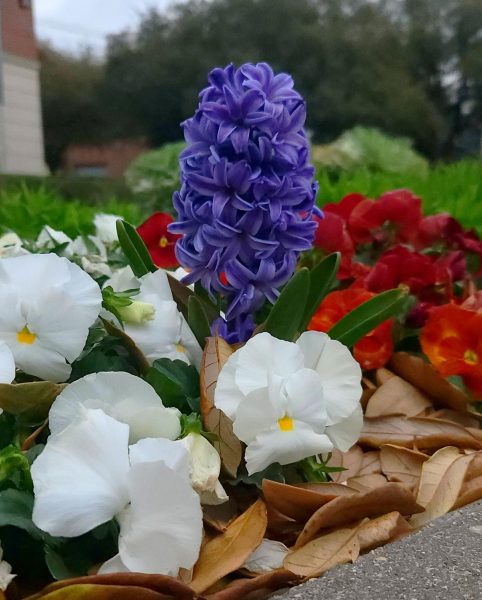
Tulips and hyacinths are part of this early bloom, brightening walkways and high-traffic around the Jerry Junkins engineering building.
“They give us some additional flowers in early spring,” Slicker said. “They’re kind of the first ones to bloom, they just kind of give us an additional color palette right before the end of the season, before we change into spring color.”
Slicker said the campus entrances and high-volume areas are refreshed each season to showcase new growth and beauty.
“We want to show off the high-profile areas on campus to highlight the mustangs,” Slicker said. “The flagpole, Dallas Hall, Bishop Boulevard, they tend to get our red, white, and blue colors.”
From trimming shrubs to arranging flowers, the team keeps the campus in tip-top shape. SMU’s lawns and gardens aren’t just green—they’re full of life, color and a little bit of Mustang magic.
“Spring is a really exciting time on campus,” Slicker said, noting the goal is, “always working towards making sure everyone has the best experience on campus.”