


On game days at SMU, the Boulevard comes alive with students dressed in red, white and blue, alumni reconnecting under white tents, and a sea of Mustang pride. Beyond the football games and annual traditions like Celebration of Lights, SMU is a place where students find a home away from home. But international and multicultural students bring their own traditions, such as Sinterklaas or Dia de los Muertos, and blend them with beloved SMU customs.
At SMU, no two students experience home the same way. The Daily Campus profiled three students and one alumna who show how their personal traditions create a community where diverse cultures meet and stand united as Mustangs.
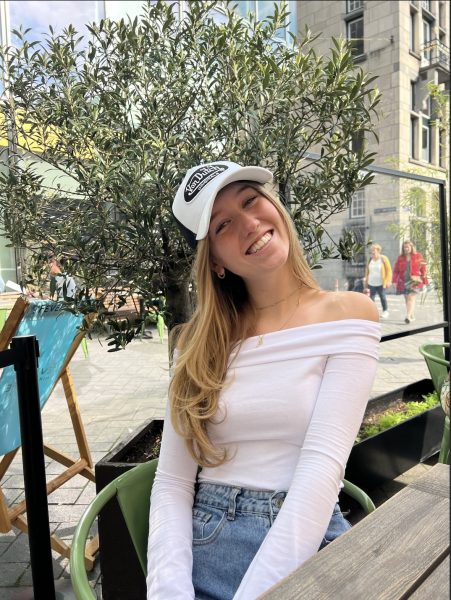
Growing up in Amsterdam, Annabelle Hummel lived a childhood marked by bikes, field hockey, travel and traditions. Attending an international school meant she spoke both Dutch and English, but Dutch remained her mother tongue. Surrounded by canals and centuries-old architecture, she grew up immersed in history.
Hummel dreamed of studying in the U.S. since she was 6 years old. Movies painted American campus life in an almost magical light, and she wanted to experience it firsthand. Her original plan was to go to college in California; however, upon visiting, she was deeply disappointed that it lacked the movie-like college experience she had always imagined. On the way back home, her parents convinced her to stop by SMU, a school she had applied to after her neighbors, who once lived in Dallas, suggested it to her parents.
“When I stepped foot on [SMU’s] campus, I completely fell in love,” Hummel said. “It really was a picture-perfect campus that matched everything I had dreamed of.”
Settling into Dallas was smooth thanks to her roommates and friends, who helped her learn American culture and made the transition easier. But she also noticed differences right away: Dallas’s car culture was unlike Amsterdam’s reliance on biking, and American social norms often left her misunderstood.
“People thought I was being rude,” Hummel said. “But Dutch people are just very blunt. Back home, it’s rude not to be.”
Over time, she learned to laugh at the misunderstandings and leaned into the parts of SMU culture that felt new and exciting. Football Saturdays, for example, became a favorite. The school spirit, the Boulevard and the energy of fans gave her an American tradition she could make her own.
And while she embraced those gameday rituals, Hummel found ways to carry pieces of the Netherlands with her. Every Dec. 5th, she celebrates Sinterklaas, which is both the Dutch version of Santa Claus and gift-giving festival. Hummel uses the holiday to writes poems and give gifts to her friends. She also wears orange, the national color, on Koningsdag, a national holiday celebrated every April 27th to honor the king’s birthday, as a reminder of home.
Holding on to those traditions while creating new ones at SMU has shaped Hummel’s college experience, and it’s the reason she encourages future international students to embrace every opportunity that comes their way.
“Branch out, be open, try everything,” Hummel said. “Say yes to weekend trips, explore the city, and make the most of your time here.”
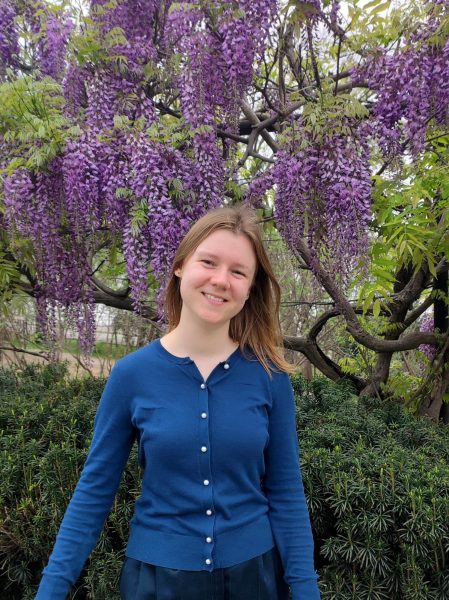
Growing up in the medium-sized town of Hrodna, Belarus, Anastasiya Shyvilka spent her childhood drawn to both studying and the English language. That passion pushed her beyond her hometown, leading her to pursue an International Baccalaureate Diploma at the New School in Tbilisi, the capital of Georgia.
Her decision to study in the U.S. began when she started looking into art degrees. In Europe, she found that students were required to commit to very specific art disciplines, such as painting, drawing, woodcarving or jewelry making before starting college. That level of specialization felt intimidating, she said.
“At that time, I did not have the courage to commit to a very narrow discipline in art,” Shyvilka said. “This is why art degrees in the U.S. drew so much of my attention.”
What stood out most about SMU was not just the flexibility of its programs but also the generous scholarships, professional approach and location. Dallas is home to museums, galleries and a thriving art scene.
Adjusting to the U.S. was not without its challenges, Shyvilka said. She had to grow more comfortable with the English language, adapt to new cultural norms and build a social circle from scratch. SMU’s smaller class sizes helped her form meaningful relationships with both professors and peers.
“Most of my art classes are rather small, with the number of students ranging between seven and 18,” Shyvilka said. “This more intimate environment helped me connect with my classmates and professors pretty fast.”
Student organizations gave her an even stronger sense of community. Joining Student Foundation and attending traditions like Celebration of Lights, Meadows Museum’s college night and ARTafterDARK, made her feel rooted on campus. She also built stability through self-care and a consistent routine, which helped Dallas and SMU start to feel like home.
Even while adapting to life in Texas, Shyvilka keeps her own traditions close. She returns to Belarus every summer and winter, spending the holidays with her family and friends. Day-to-day, her morning routine is leisurely.
“I start my morning at a slower pace with some relaxing stretching activities and room for thought,” Shyvilka said. “It helps me to recollect my energy and get ready for the day.”
Finding her place in small classes and campus organizations taught Shyvilka the importance of seeking out community, a lesson she hopes future international students will carry with them.
“Stay open and receptive to new things, ask a lot of questions and connect with different people across diverse student organizations until you find your people,” Shyvilka said. “Get in touch with upperclassmen and alumni to learn more about incredible SMU resources that can be meaningful for you and your development.”
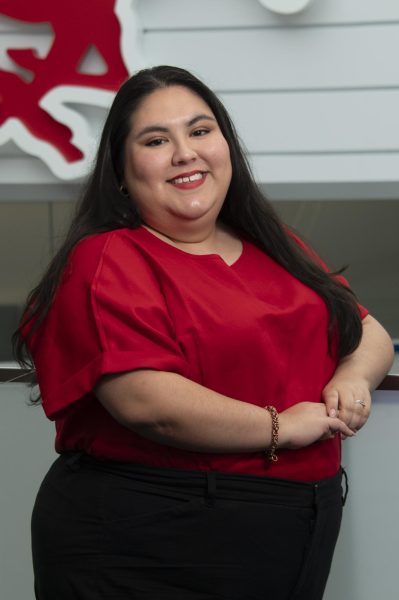
Born in Dallas but raised in Edinburg, Texas, Danielle Palomo grew up in a close-knit, predominantly Hispanic community that shaped her views on college and beyond.
As the eldest of three, she spent her childhood surrounded by family, celebrating cultural traditions such as Dia de los Muertos, Las Posadas and Dia de los Reyes.
“Traditions were interwoven into my daily life,” Palomo said. “I was raised believing family is everything, community is important and cooking is medicine.”
After graduating from high school, Palomo chose SMU because it’s a small school in a big city.
SMU was far enough from the Rio Grande Valley (RGV), a predominantly Hispanic region of Texas that borders Mexico, to feel independent, yet close enough to stay connected to family.
The diversity on campus was an eye-opening experience for her, and she recalled feeling intimidated by the wealth she saw.
“I grew up in a low-income household, so seeing people have fancy bags, designer clothes and cars was something new to me,” she said.
Despite her strong cultural roots, Palomo admitted she didn’t bring many of her Hispanic traditions with her to SMU.
“When I got to SMU, I was one of six people from the RGV,” she said. “I felt completely alone, and it was very difficult to find a sense of community.”
Today, as SMU’s Coordinator for Community Engagement in the Social Change and Intercultural Engagement Office, Palomo proudly embraces her heritage.
“After college, I realized that my culture was a part of my heart and I decided to be more open to sharing and practicing traditions,” Palomo said.
Palomo has helped showcase Hispanic culture during homecoming through SMU’s Hispanic or Latino Association’s Loteria-themed events and SMU’s International Office’s Dia de los Muertos ofrenda in Hughes-Trigg.
For Palomo, Homecoming is both a memory and a connection.
“It means reminiscing and sharing memories with my students,” she said.
Her advice to future students who might feel wary about adopting new traditions is to be authentic.
“Your experiences are yours, and they are just as valuable.”
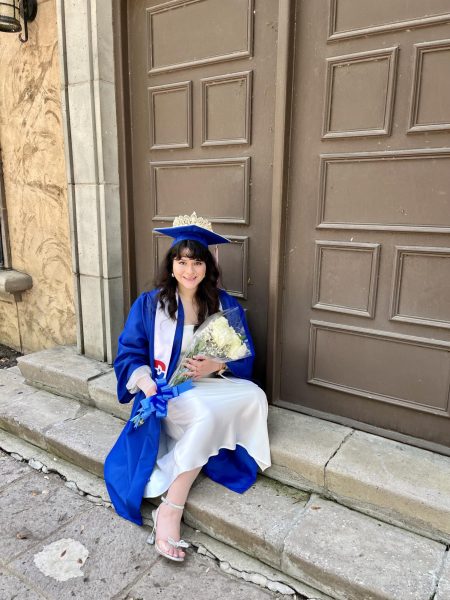
Valeria Rincon also grew up immersed in the rich traditions of her Hispanic heritage. From Dia de los Muertos altars honoring lost loved ones to festive Noche Buena Christmas celebrations with family, she learned early on the importance of tradition and community.
“We take time to remember those we’ve lost, including forgotten souls,” Rincon said about Dia de los Muertos. “It’s a beautiful way to honor those who may not have anyone else praying for them.”
When choosing a college, Rincon felt that SMU offered the perfect balance of community and opportunity.
Even though she initially felt pressured to fit in, she quickly realized that the university encouraged its students to bring a piece of home with them.
“I’ve learned that SMU has grown and adapted to embrace incoming cultures,” she said.
Rincon said the SCIE’s Office Hispanic Heritage Month Kickoff helped blend her heritage and connection to the university.
“The Kickoff was the moment I realized how connected we could be,” she said. “The dances, music, entertainment and overall environment were amazing.”
She has also found that Hispanic traditions can complement SMU’s long-standing homecoming traditions.
She points to the ways the Hispanic or Latino Association, known as HOLA, integrates music, dance and cultural themes into Homecoming floats and events.
“Both Homecoming and Hispanic traditions are about celebration, pride and community,” Rincon said.
Rincon shared her advice for future students who are looking to make SMU more their home.
“Be proud of who you are and know that your culture belongs here,” she explained. “Celebrating our traditions openly shows that we don’t have to leave our heritage behind—we can bring it with us and share it.”