



A pivotal period, Lent is a 40-day season of penance that is observed by many Christian denominations. Lent began on Ash Wednesday, Feb. 18, and ends during Holy Week, starting on Palm Sunday, March 29, until Easter, April 5. Here at SMU, many students observe Lent and started the season with Ash Wednesday services around campus.
Students could be seen with ashes on their foreheads throughout the day, a giveaway of their attendance at Ash Wednesday services. The Rev. Kevin Kolker, chaplain and director of the Catholic Campus Ministry, shed some light on the symbolism and importance of Lent.
“The service on Ash Wednesday includes scripture readings that focus on the need for repentance,” Kolker said. “After these readings, the faithful come forward to receive ashes on their forehead.”
The ashes used during the Ash Wednesday service are from the palm branches from the previous Palm Sunday Mass.
“As he imposes ashes, the minister says to each person, ‘Remember that you are dust and to dust you shall return.’ This is a sobering reminder of our mortality,” Kolker said.
After Ash Wednesday, Lent is observed in various ways depending on the denomination and how seriously one celebrates the season. Angela Miller, a current SMU junior and Catholic, shared how she is observing Lent.
“Sacrifice or giving something up is to just have something that normally brings you comfort and having the absence of that. And in the absence of it, you remember God’s presence.” Miller said. “This year for Lent, I deleted TikTok.”
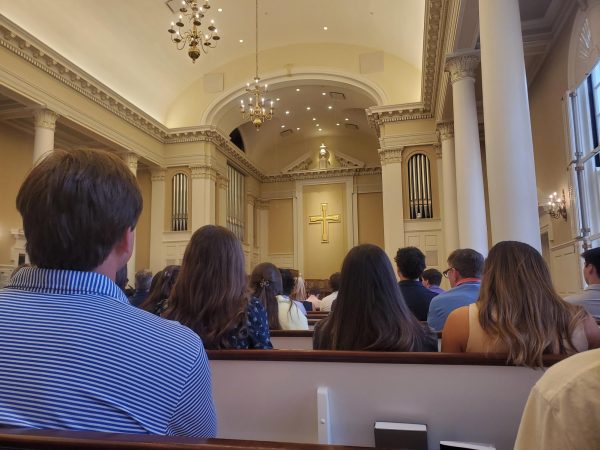
When fasting, God is meant to replace whatever it is that has been given up. In the absence of that thing, God should fill it. Many who participate in Lent, such as Miller, find this practice to be beneficial.
“I just feel like I remember Jesus more often throughout the day,” Miller said.
Sometimes the Lenten sacrifice of giving something up is confused with the betterment of self. Calyn Donaldson, coordinator of Wesley House, the college ministry at Highland Park United Methodist Church, and a third-year Master of Divinity student at Perkins School of Theology, shared her thoughts on this.
“It’s about sacrificing something in order to grow closer to God,” Donaldson said. “Lent is not about self-improvement, but improving your relationship with God.”
While the Catholic Ash Wednesday service looks a little different than the Methodist one, Donaldson explained that the concept of Lent remains the same across the two denominations. The season still lasts for 40 days, and a Lenten sacrifice is still given.
“The best scripture I can point you to is Jesus in the wilderness. That’s where we get the 40 days from,” Donaldson said.
Kolker also explained the importance of the 40 days and expanded on why a Lenten sacrifice is made.
“These 40 days call to mind the Israelite’s 40-year journey through the wilderness and Jesus’ 40 days overcoming the devil’s temptations in the desert,” Kolker said. “Catholics practice prayer, fasting, and almsgiving more intentionally in order to experience greater conversion from sin and deeper relationship with God.”
Kolker also explained why meat is avoided on Fridays, a practice that is not carried out within the Methodist church.
“This is a sacrifice that helps Catholics remember and cherish Christ’s offering of himself on the cross on Good Friday,” Kolker said.
Other activities during Lent for Catholics involve feeding the poor, serving the homeless and intentional generosity.
“In general, what Catholics strive to do throughout the entire year, they do with greater zeal and purpose during Lent,” Kolker said.
Lent is also an important time for those who are to be baptized on Easter. For them, Lent is a time of preparation as well as a time of remembrance and sacrifice.
“The Church will experience the fruitfulness of its faith in action by welcoming new believers into the abundant life we have in Christ Jesus,” Kolker said.
Whether you are Christian or not, Lent is very clear in its purpose. It is not a time of betterment or self-fulfillment, but a sacrificial season offered to the Lord.