

The archives: Where SMU’s history lives
Inside the DeGolyer Library, located on the third floor of Fondren, SMU’s past is preserved in thousands of images, periodicals and yearbooks.
The archives house business documents, faculty papers, records from student organizations and one of the most requested collections — photographs. From the first graduation processions to campus expansion, SMU’s life and history, captured one shot at a time, are preserved and cared for by its passionate archivists, such as Benjamin Jenkins, PhD.
“You can see stuff like Dallas Hall being built or what SMU looked like in the roaring 20s or under WWII,” Jenkins said. “All the way up to today, essentially, where we have footage of the [Trevor] Rees-Jones Library of the American West under construction also in our collection.”

Since June 2025, Jenkins has been the DeGoyler’s archivist and has worked to preserve records detailing the school’s history. Jenkins focuses on collection development, processing collections, digital preservation, exhibits and community-centered initiatives.
The sheer volume of materials makes it difficult to digitize everything, so most documents remain exclusively physical. Jenkins and the library staff prioritize digitizing materials they believe will be the most requested, such as The Rotunda yearbooks or older editions of The Daily Campus.
But the archives are more than administrative paperwork and yearbooks. They document student life in all its variety and complexity, from long-standing organizations like fraternities and sororities to those that emerged during the civil rights era.
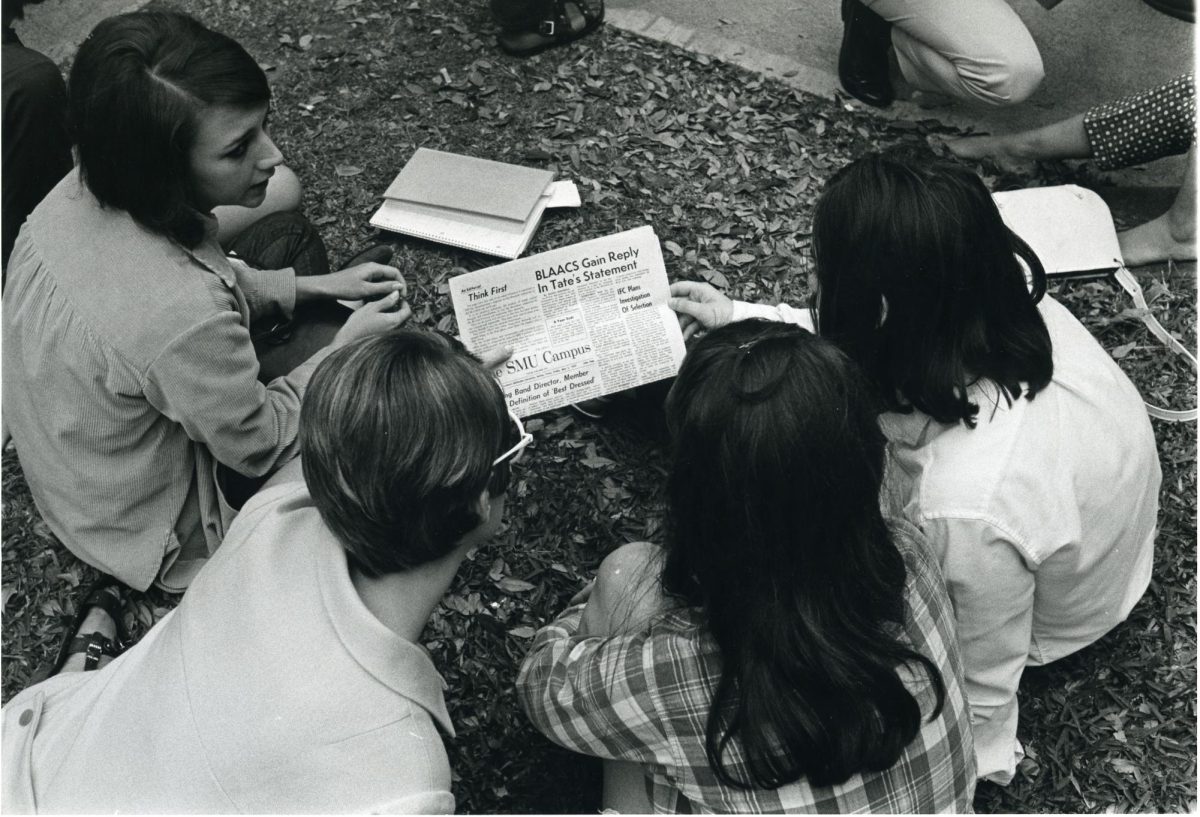
Jenkins said the Black League of Afro-American and African College Students, or BLAACS, organization stands out to him. BLAACS advocated in the 1960s and 1970s for greater representation of people of color among faculty and for curriculum changes.
“They were very much in the classroom, meeting with people, not necessarily saying they weren’t doing demonstrations as well, because they were,” Jenkins said. “But it was a nonviolent movement, and to see that taking place within the halls of a hallowed academic institution, to me, is exactly what discourse and civil liberties in education are supposed to look like.”
Jenkins believes that to understand where SMU is and what it represents today, it’s important to know where it’s come from.
“I don’t think SMU would be the institution that we know it is today without students, right? I mean, they’re the ones out on the football field, every game, they’re the ones bringing Peruna out,” Jenkins said.
At the DeGolyer Library, the archives preserve SMU’s history while telling its story, revealing the origins of today’s student organizations and demonstrating how they continue to shape the school’s identity.
“We only understand who we are as an institution by having access to that documentary record, whether that is through photographs of buildings going up, or letters to the editor during the Vietnam War,” Jenkins said. “Without those records, SMU doesn’t have a cultural identity.”
The Association of Black Students at SMU: One becomes many
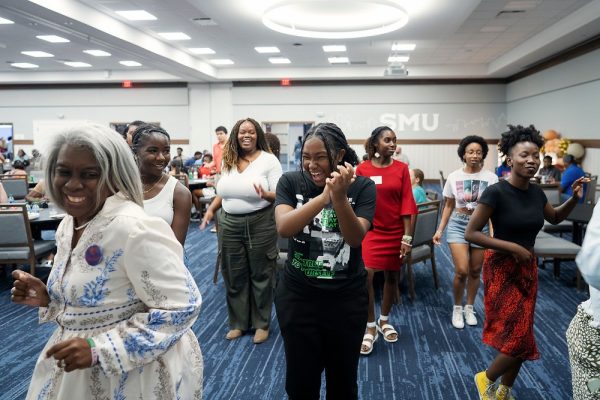
While BLAACS fell by the wayside after the 1970s, others grew and diversified, and the Association of Black Students, known as ABS, emerged as the organization’s successor.
Today, ABS serves as the umbrella organization for various Black student groups, including the African Student Association and others focused on niche subjects and natural hair care with SMU Fro. Alongside ABS, professional affinity groups like the Black Business Organization, which partners with the Hegi Family Career Development Center, help Black students advance their professional interests.
Grace Burno, a junior double-majoring in biology and psychology on a pre-physician track, has been involved with ABS since her freshman year and now serves as the president.
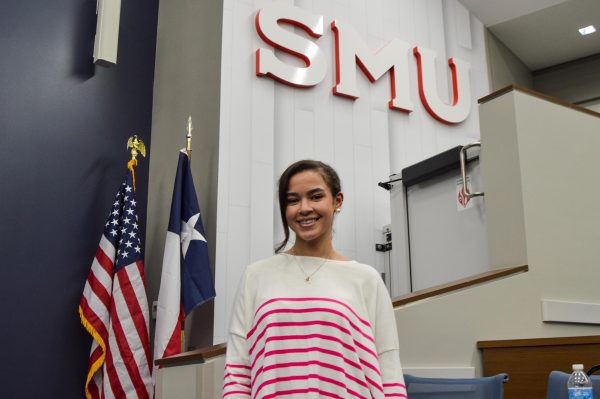
“I think ABS really strengthens our community, especially when it comes to minorities,” Burno said. “Every semester we try to have at least two to three big events that we invite all staff, anyone at SMU, to attend just to kind of get involved in our culture.”
ABS holds various events on campus, such as the Fish Fry during Family Weekend, The Big Chill kickoff at the start of the fall semester, and the Black Excellence Ball, which drew unprecedented attendance from Black trustees and former SMU President R. Gerald Turner.
Burno sees ABS continuing its legacy and that of other former clubs, like BLAACS, while adapting to a more diverse campus.
“When I compare and contrast,” Burno said. “BLAACS were a smaller group. It was 10 to 15 people who would come by because SMU wasn’t as diverse as it is now. Now at our general body meetings, we see up to 40, 50, 60 people, and I think that difference shows how important an organization like ABS really is on campus.”
Challenges, from small to big, eventually emerge from outreach to ensure all feel welcome without pressure, to navigating historical tensions like those during the 2020 #BlackAtSMU movement, which led to the formation of the Black Unity Forum, creating a dialogue among faculty, staff and administration.
Burno hopes for ABS to remain a caring space, without the often-misunderstood racially-tied inclusion being mistaken for division.
“I want people to look back at ABS as a kind of safe place where you can go and relax after a stressful day,” Burno said. “And feel welcome with people that might look like you.”
Theater at SMU: From club to major
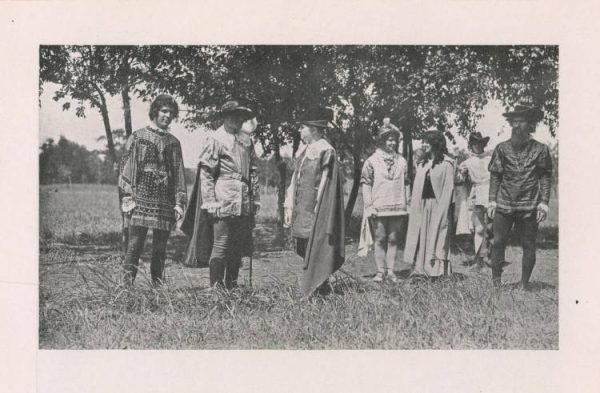
Since 1916, the Arden Club has represented theatrical talent and passion. The club was a student-run dramatic organization that carried campus theater for decades before there was a dedicated theater major, which wasn’t formalized until 1964, when Meadows went from the School of Music to the School of the Arts.
The Arden club, founded and sponsored by faculty member Mary McCord, after many years disbanded around the late 60s, according to listings in the Rotunda yearbooks.
Today, theater at SMU lives on within the Meadows School of the Arts, but it still reflects the enduring influence and drive of performing arts students, as it did long ago.
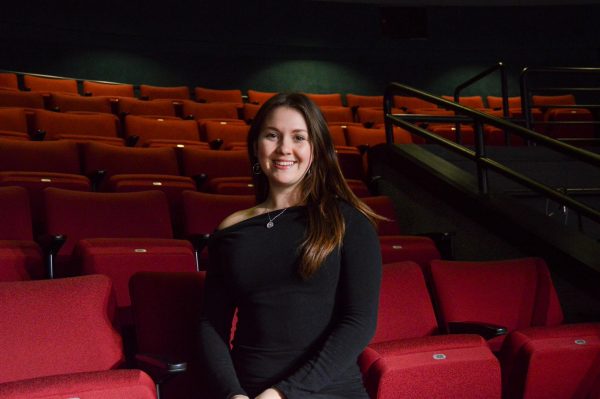
Dakota Rose, a double major in theater studies and English, recently directed a production through SMU Student Theater, “Mary Jane” by Amy Herzog, which showcases the initiative to allow students to create and stage their own work.
“I feel very proud to be a part of the SMU program,” Rose said. “I feel very excited about the projects we’re doing. We do a phenomenal job of cultivating a culture that is open to every part of theater.”
Productions are decided by the department labs, then handed off to the class members, allowing students to put their knowledge into practice. Rose believes this structure gives students significant creative control.
Rose, after taking on the great task of leading her own show, is motivated to inspire younger students, taking from her mentors and from what she’s seen in impressionable student-directed productions.
“My freshman year, the rep shows that were student-directed made a big impact on me,” Rose said. “I felt very inspired to continue to do my art. I hope to inspire them as well to continue pursuing that dream and pursuing that passion.”
Student Senate: The students’ voices
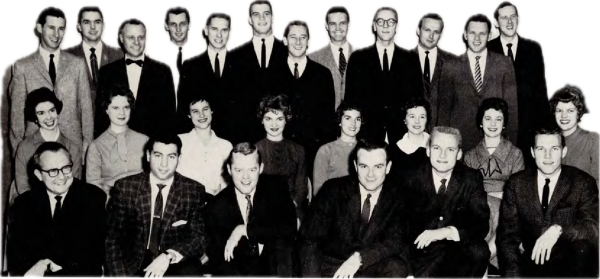
Before SMU became the nationally recognized university that it is today, it was a small campus centered around one building, Dallas Hall. At a time when all the students of the school gathered into one building, academia wasn’t the only thing growing.
The student government bloomed in 1915, shortly after classes started, and became what was then known as the SMU Students’ Association— now the Student Senate.
Sean Murphy, PhD, director of Student Center and Activities and staff advisor to the Student Senate since 2023, speaks to the Student Senate’s independence.
“Students at this university run the Student Senate,” Murphy said. “I’ve often said: I’m an advisor, I’m not a supervisor.”
Murphy points out that, as far back as 1919, the Student Senate, the Students’ Association at the time, required any proposed amendment to be approved by the faculty before being voted on. In 2026 and for many years prior, Murphy proudly states that that is no longer the case.
“Students exercising their autonomy in their efforts for shared governance at this university is a tremendously important aspect of what it means for their experience and for their contribution,” Murphy said.
Will Leathers, a senior majoring in international studies and business management, has been with the Senate since his freshman year and, since 2025, serves as the Student Body President.
“I think the [Student Senate] kind of sets the tone for a lot of our other student organizations here,” Leathers said. “We are making sure that we’re recognizing people and making people feel heard and seen, and we’re giving people a voice at the table.”
As Leathers says, the Senate influences culture at SMU through representation and supporting student initiatives like The Period Project, which supplies free feminine hygiene products, providing outdoor seating in the Mary Hay Peyton Shuttles quad and extending Thanksgiving break.
Leathers’s most proud effort in the Senate is reinstating Founders Day weekend and increasing engagement, resulting in higher voter turnout than at peer institutions. He hopes shared governance and student voice continue growing.
“I hope the shared governance continues to stay and the student voice continues to grow involvement,” Leathers said. “And that we can really help continue this Mustang momentum.”
Murphy also shares the belief that the Senate’s role is to foster a diverse, inclusive culture at SMU.
“It’s very important,” Murphy said. “It’s the representation of voices and the more voices that are heard, I think the more open culture there is.”
Editor’s Note: In the print version of this story, the Black Business Organization was initially written as an umbrella organization of the Association of Black Students. The organization is a separate entity and has been corrected.