

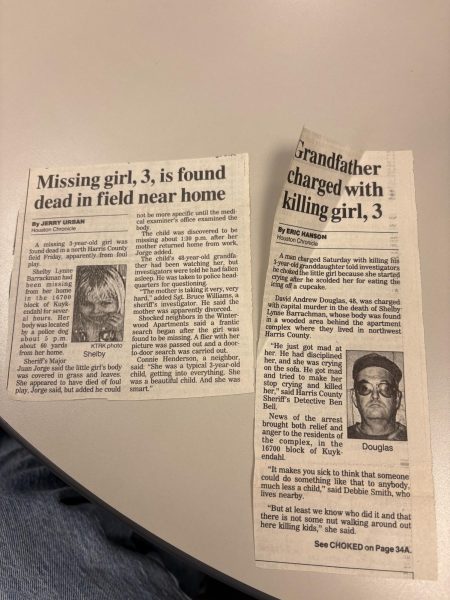
Detective James Budd still keeps the clippings. Inside a worn office folder, pages from decades of cases sit yellowed with age, their ink darkening as the paper slowly breaks down. Faces and names blur together, each tied to a call that never fully left him.
One case still stands out—a missing girl Budd found 45 minutes after the call came in. She had been killed by her grandfather.
“I picked it up [radio call]… said they had a missing girl,” Budd said. “Forty-five minutes later, I recovered her body. Her maternal grandfather… strangled her to death because she wouldn’t stop crying.”
Moments like these do not end when a case is closed.
For officers at Southern Methodist University, certain calls become permanent reference points—shaping how they approach the public, how they respond in the field and how they carry the weight of their work long after a shift ends.
The public often views police encounters as isolated events—traffic stops or scenes from television crime shows. But for many officers, some calls linger. Over time, those experiences can change them, mentally and physically, influencing trust, caution and empathy in ways the public rarely sees.
Detective Budd is one of many officers whose work is defined not only by the cases they handle, but by the ones that stay with them.
“What I saw doesn’t make a difference, what I do does,” Budd said. “Thats my driving force.”
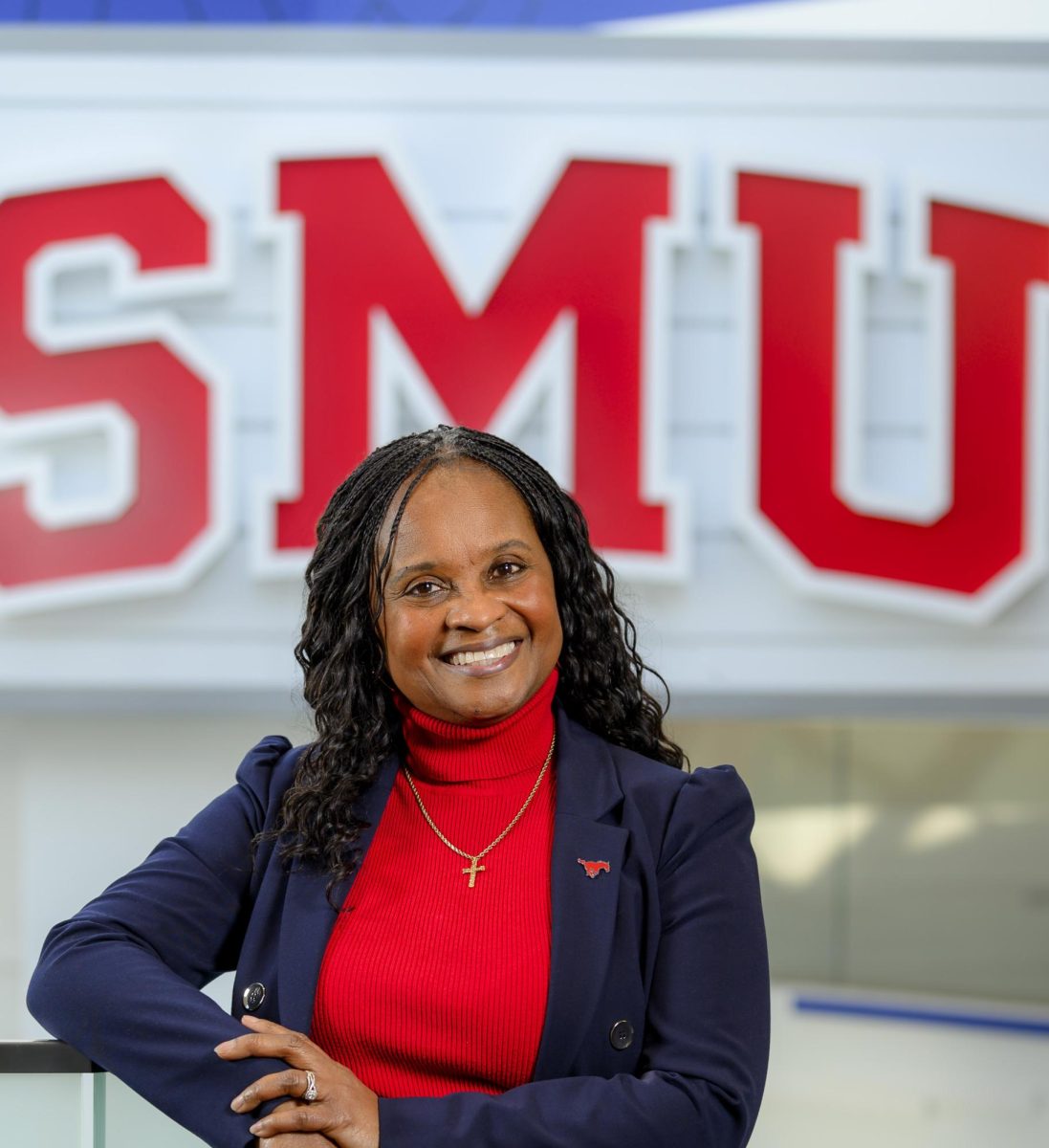
Sergeant Courtney Morrison said entering law enforcement was never really a question for her. She does not remember wanting to be anything else.
“I wanted to be a police officer because Hollywood glorified it,” Morrison said. “There’s ‘Cops,’ and then there’s ‘Law & Order SVU’ and there’s Olivia Benson, and they’re jumping over fences and just chasing people.”
She followed that image into the field, but said the reality shifted once she began the work on her own.
After graduating from the police academy, Morrison began responding to calls on her own. At 21-years-old, she said she quickly realized the job was not what television had shown her.
“The one thing that I didn’t anticipate or prepare myself for was the amount of death that I would see,” Morrison said.
Morrison said those early calls changed how she saw the job—and the people she was responding to.
“I didn’t take into account that there would be an 80-year-old woman who rolls over in the morning and sees that the love of her life, who she’s been married to for 50 years, is deceased,” Morrison said.
That experience forced her to slow down and understand the human side of each call, especially when interacting with victims in their most vulnerable moments.
Over time, Morrison said she began to shift from enforcement-focused policing to a more people-centered approach, shaped by the kinds of calls she could not forget.
“I really tapped into the emotional intelligence side,” Morrison said. “That’s what segued me into trauma informed policing, being present for victims.”
Morrison said that change eventually influenced the way she works with students today, especially in moments involving crisis or uncertainty.
“I really like interacting with people,” Morrison said. “And I really like the happy side of law enforcement, the community engagement.”
Now working in a campus environment, she said she sees her role less as enforcement and more as guidance.
“I figured that I could be most beneficial at an institution of higher education,” Morrison said.
Morrison said that shift allows her to focus on connection, intervention and support—especially with students navigating difficult situations for the first time.
“I have some discretion,” Morrison said. “I can take you to jail, or I can refer you to the conduct office or I can just let things go.”
But she said most of the job is not about enforcement at all.
“It’s much more of an opportunity to be out there outward-facing,” Morrison said.
Even in those moments, she said her goal remains the same: to meet people where they are, especially when they are struggling.
“We just want you guys to be the best that you can be,” Morrison said. “We’re here for you.”
Experiences like these are not uncommon for officers.
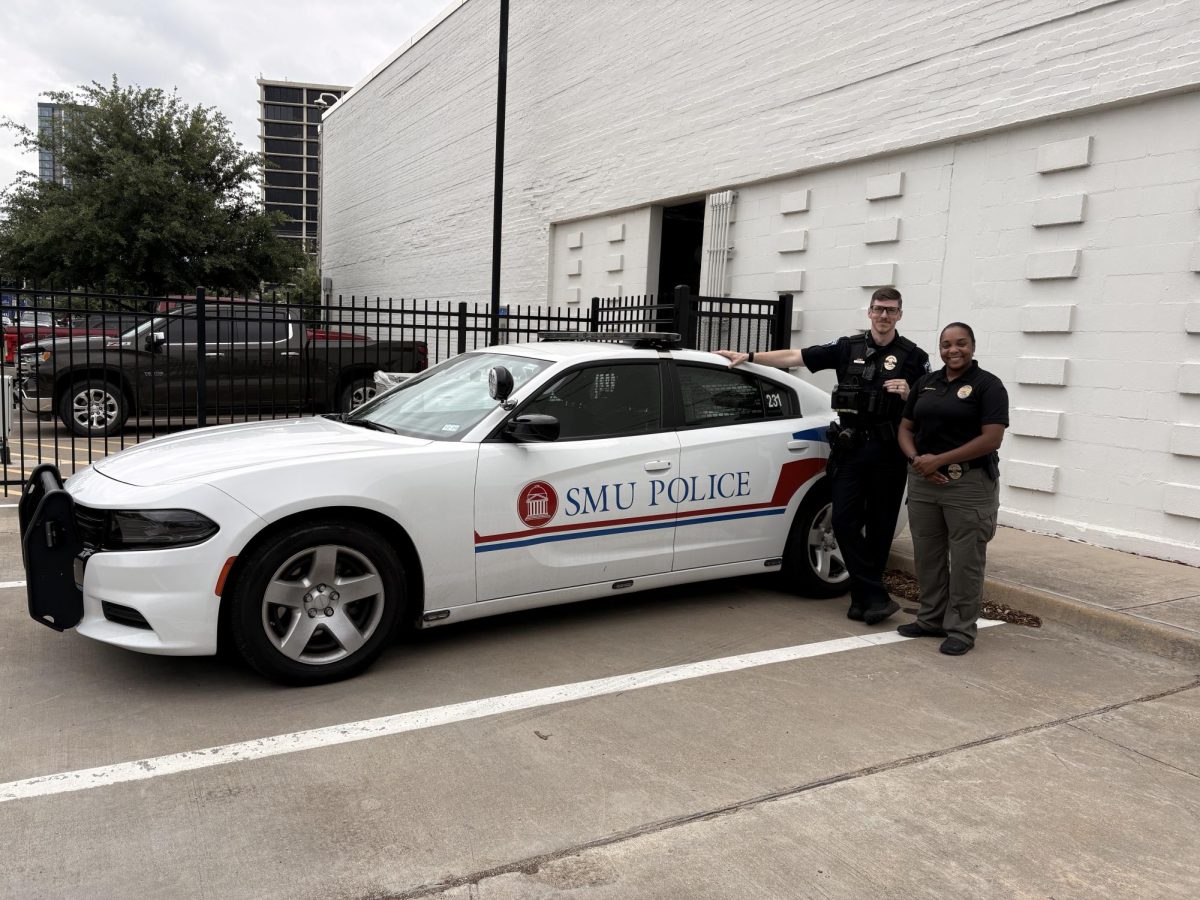
Another SMU police officer said mental health-related calls are what stand out most in his experience. Officers are trained to assess situations quickly and connect individuals with resources, including counseling or emergency care. In some cases, students are taken to the hospital for evaluation.
“It’s all usually parent pressure or peer pressure or the time of the year, what time in the semester, whether finals are coming up,” Officer Justin Harmon said. “It’s a lot of compounding things that cause these issues.”
One call involved a student on top of a parking garage. Suicide prevention had already been speaking with her on the phone when officers arrived.
Her story, Harmon said, was that she had enrolled in school but was unable to keep up academically. She had told her family she was on track to graduate. That day they found her, it was supposed to be her graduation day.
“They were flying out here to see her graduate,” Harmon said. “But she had only completed a couple semesters.”
Silence followed the recollection.
“Yeah,” Harmon said. “It was tough.”
Even after those calls end, the transition is not immediate.
“The hardest thing is going from the higher stress calls, whether it be a mental health or some type of disturbance, going from call to call to call, and then going home to the family and just having to turn it off,” Harmon said. “It’s hard to do that.”
Harmon expressed that the separation between life and work is necessary but not easy.
“I don’t want them to see that type of stress coming from me and that impacting them,” Harmon said.
Harmon said one misconception is that officers seek out confrontation.
“I wish people would understand I’m not trying to get anybody in trouble. I didn’t want to show up and have to arrest anybody. I didn’t want to have to do any of that,” Harmon said. “That’s not the case for any of the officers that I’ve ever worked with.”
Back at the station, reports are filed and patrol cars reset for the next call. But some moments do not reset. Clippings are still in the folder, feelings of grief linger, moments of tragedy sit.
“We’re people too,” Harmon said.