


Before Guillermo del Toro’s monster epic, “Frankenstein,” releases worldwide on Netflix on Nov. 7, it has screened in select theaters nationwide for a limited run. The brilliant new adaptation of Mary Shelley’s novel, “Frankenstein; or, The Modern Prometheus,” confirms this to be the Academy Award-winning director’s magnum opus.
Unlike most film screenings, when there are limited Netflix releases, it’s usually done solely to be considered for an Academy Award nomination. Netflix has done similar stunts in the past with “The Killer” and “Glass Onion: A Knives Out Mystery,” with the latter receiving a larger promotion and greater accessibility due to its franchise status. Most theatrically released Netflix films won’t be shown in a large theater chain like AMC or Cinemark. But in smaller venues like Alamo Drafthouse, Studio Movie Grill and the Angelika Film Center — which is where local Dallas cinephiles and I had the lucky chance to catch del Toro’s latest film early.
Following the original novel fairly closely, the story goes as the logline reads: “Dr. Victor Frankenstein, a brilliant but egotistical scientist, brings a creature to life in a monstrous experiment that ultimately leads to the undoing of both the creator and his tragic creation.”
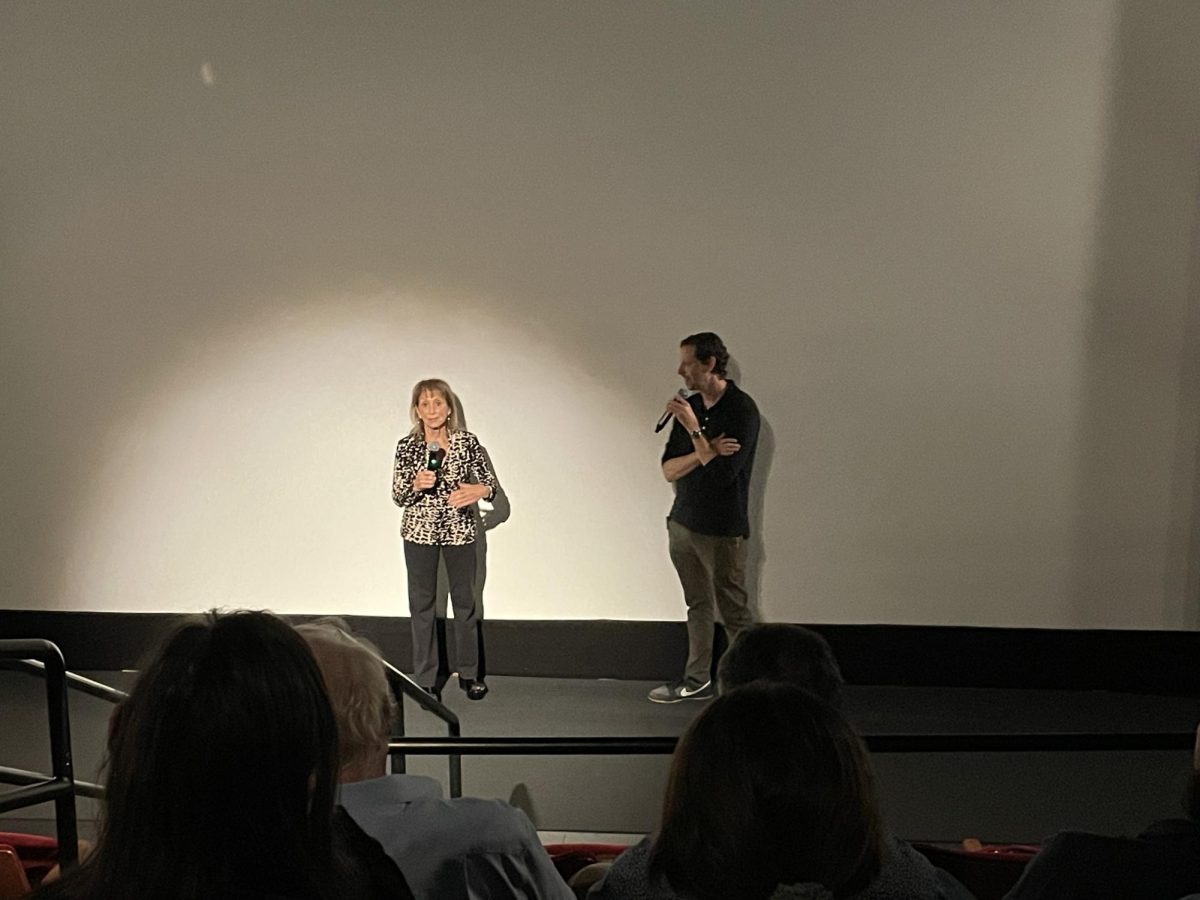
Film student Brian Dashner at Southern Methodist University praises “Frankenstein” after watching it at a 35mm film screening at the Angelika Film Center on Mockingbird Lane. Dashner’s favorite aspects were the perfect casting and set design.
“[Del Toro] did a fantastic job at storytelling, interpreting Mary Shelley’s original story into a fantastic film,” Dashner said.
Oscar Isaac stars in the film playing the titular character and mad scientist, Victor Frankenstein. The film is divided into two halves, with the first detailing the life and career of Frankenstein, where Isaac carries the story through his masterful portrayal of the complex character as he strives to achieve the ultimate goal of science: Immortality.
Selling the character of the mad scientist is half of the struggle to make a good, complete Frankenstein adaptation, since the thematic weight of the ethics of science is integral to the story. That and the whole idea of the man, Frankenstein, is the true monster of the story for his wicked ambition and gray morality and this new film vividly illustrates that.
However, what makes “Frankenstein” shine is the heart of the story and that’s the equally important character, the Creature, played by Jacob Elordi. For where Frankenstein’s madness must be evident for a faithful adaptation, so should the humanity within the Creature. Elordi fades into the immense persona of the Creature, and while few words are spoken for most of the film, his best performance of his career emerges. Del Toro ensures that the Creature is as oddly adorable as it is frightening, and the story that follows really connects with you as he innocently learns about humanity and language.
Dashner was overjoyed with the film’s realism and its commitment to large-scale sets and lifelike worldbuilding.
“The set design was so huge and the fact that they marketed this film as being a no AI film, or minimal CGI, real sets — I think it really showed on screen,” Dashner said. “Having his lab actually come to life with real sets and the basement where Frankenstein’s monster was kept… it really transcended me into the film.”
As Dashner mentioned, del Toro did his best to avoid CGI and other digital effects for realism and “old-fashioned craftsmanship,” which were the film’s big selling points. Those goals were certainly and exceedingly met while watching the movie, as the large wooden ship rocked through Arctic ice in one scene, for example.
Del Toro is widely known as the biggest fan of monster stories, which is clearly evident in his career, from the half-demon main character in “Hellboy” to the enormous kaiju in “Pacific Rim.” What makes del Toro the best suitor to direct a Frankenstein movie is understanding what makes the story great, humanizing the Creature, and doing the opposite with the doctor, Frankenstein.
While the limited release before its streaming debut drew little attention due to the lack of marketing and availability, this movie warranted the price of admission.
“I’m biased because I’m a film student, but I would say that seeing a movie in theaters… It’s the most respectful way to watch a movie, because that’s what it’s made for,” Dashner said. “So I highly recommend anybody who wants to see a movie to go see it on a big screen if they have the means to do so.”