

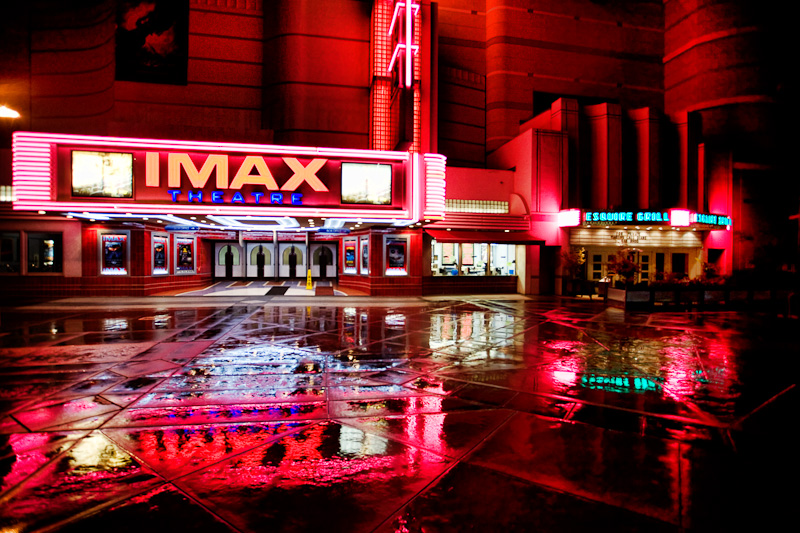
Rewind to April 2025, and “Sinners”— one of the most talked-about films of the year — is playing nationwide. Interested moviegoers head to their local theater to catch what everyone is raving about. But not just any theater or screen will do, because when this film is praised online, there’s emphasis on how it should be experienced as much as the movie itself. “IMAX in 70mm is the way to go,” so they look up tickets to buy online and find they’re $30 each.
Inflation is the first culprit, but after a quick search, it turns out the high ticket price is due to the format markup for the movie’s presentation. In “Sinners’” case, watching it in IMAX 70mm is the way to watch it, and not just because “film bros” online say so, but the director, Ryan Coogler, and his online campaigns claimed it to be the highest quality to experience it in.
Recently, every year has had a tentpole film with urgency to watch in premium-format theaters, with screens like IMAX, 4DX, 70mm film, Dolby Cinema and Cinemark XD, to name a few.
As recent data shows, not only are there more investments in expanding premium large-format screens across the world, but a movie’s box office return now relies heavily on those screens to make up for the decline in moviegoer populations.
Last year alone included two major films, such as “Sinners” and Paul Thomas Anderson’s “One Battle After Another.”
In 2024, one of the biggest films was Denis Villeneuve’s sci-fi sequel, “Dune: Part Two” — a large-scale action-adventure film that needs no excuse for the biggest screen. And the year before that, in 2023, was Christopher Nolan’s magnum opus, “Oppenheimer,” which was widely advertised and marketed to be watched “the way it was intended” on IMAX 70mm screens.
In August 2025, Sean Gamble, the president and CEO of Cinemark, argued for the importance of premium large-screen formats, or PLF, and also recognized the slow progress and struggles of getting people into those specific seats.
“At Cinemark, while we hold our IMAXs and our XDs and all our other enhanced screens in very high regard,” Gamble said, “Our focus is on making sure that the entirety of coming to our theaters feels like a premium moviegoing experience, regardless of which auditorium our guests ultimately choose.”
It’s not just that there is a sudden interest among niche cinephiles in watching films in PLFs, but also a conscious decision to enhance the viewers’ experience in every theater possible.
Cinema United, a trade organization representing movie theater owners and thousands of screens worldwide, promotes and protects film exhibitions and the industry’s interests.
In a recent investment report from Cinema United, more than 200 PLFs have been added worldwide since 2023, bringing the total to nearly 6,000. This overall net addition in a post-COVID recovery industry illustrates PLF as the growth model, not a short-term trend.
While one might see this as saturating the market by supplying them when demand is low, there is evidence of profits to be made in theaters worldwide that already hold PLFs.
According to a recent Cinemark Holdings investor quarterly presentation, “On just 5% of our screens, our XD premium large format generated 13% of global box office in Q2 2025 — and it was our second-best XD quarter ever.”
This data shows that with just a small amount of a specific PLF, such as XD at Cinemark, they achieved a 2.6x revenue multiplier, indicating that PLFs are a core profit driver.
This modern PLF model did not come from sheer opportunity to enhance revenue or test new technology, as it did back in the late 2000s with the breakthrough of digital 3D applied to narrative films, with “Chicken Little” of all movies, believe it or not.
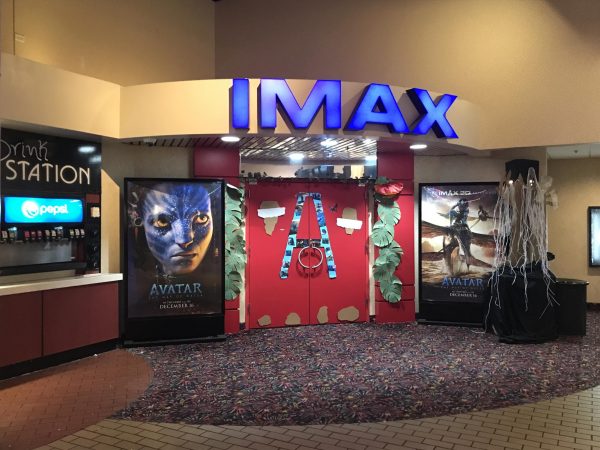
(Courtesy of ‘ShadZ01’)
David Sedman, a film professor at Southern Methodist University, teaches a class on this very subject: film exhibition and distribution. He argues that the recent rise of PLF is more than a new gimmick to hook audiences. In fact, they are the long-term response against the film industry’s competitor — streaming services.
“The PLF represents one of the three last lines of defense for theatres in the streaming era that don’t have upscale entertainment and/or food and drink options,” Sedman said. “That’s why the exhibitors are adding more of those and reducing, removing and combining standard, commoditized auditoriums.”
Still, the new premium format pushes back against cheaper alternatives, such as standard theater screenings with no extra features. After all, the average moviegoer is willing to forgo those perks to save money and stay home.
“PLFs still only account for about 15% of the domestic box office,” Gamble said. “The bulk of domestic box office, 85% of it, continues to be driven by all other cinematic auditoriums in the industry.”
At the end of the day, the capital is seemingly committed, and the numbers speak for themselves; thus, more and more standard auditoriums will be quietly converted or closed. If anyone is waiting for the bubble of the premium-tier film experience to pop, they might have to wait a while.
Today, the push for PLFs and the dedicated campaigns to view films on bigger screens continues, following the passionate examples like Christopher Nolan and Ryan Coogler.
“Project Hail Mary,” a new sci-fi adventure film, adapts the novel of the same name from Andy Weir, the author of “The Martian,” and has been formatted for IMAX, Dolby Cinema, ScreenX and 4DX, and transferred to IMAX 70mm film for projection.
The film is set to release on March 20, and Phil Lord and Chris Miller, the director duo, put out an impressive, entertaining video to promote each format and encourage viewers to watch their new film in a way that best immerses them in the story.
“The answer to the newer PLF formats and branding concepts question is that they aren’t really a passing fad, per se, but more of a contemporary premium tier of the experience economy,” Sedman said.