

The semi-rural area between Waco and Crawford, Texas might not leave a lasting impression beyond flat horizons of fields and open skies. But that’s just where Jake Willeford grew up, an up-and-coming filmmaker who’s been gifted with the opportunity to create the greatest of all projects: a dream any film student would wish for.
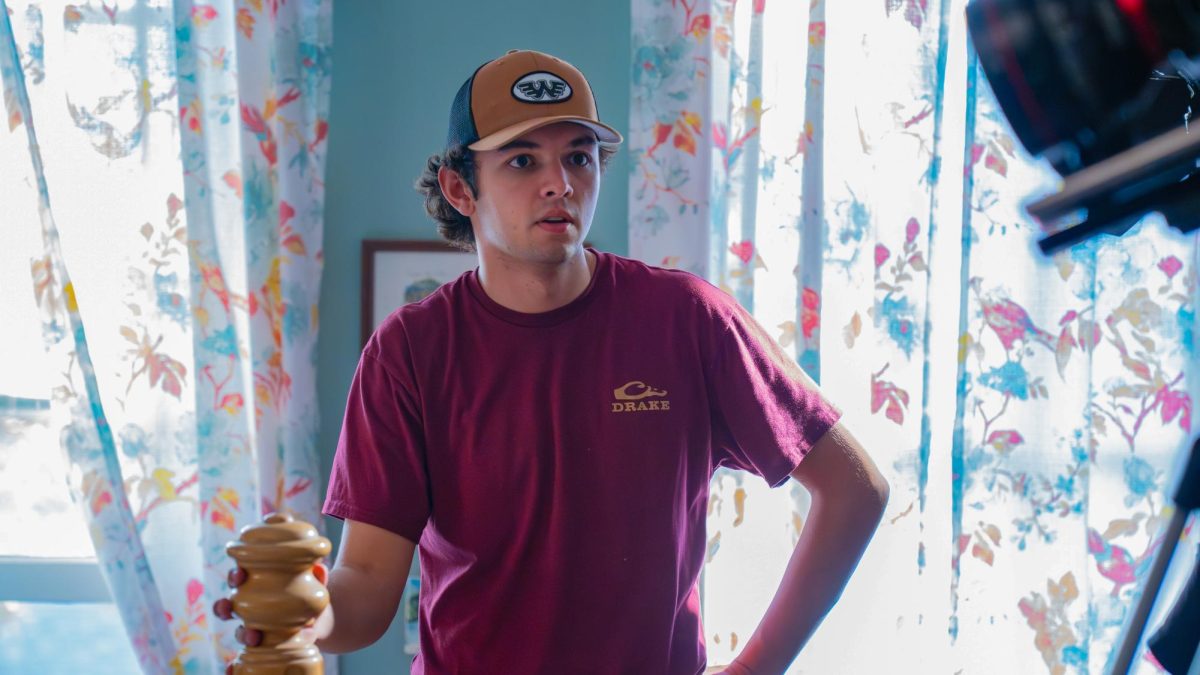
Willeford is a third-year film student at SMU whose script, “When the Azaleas Bloomed,” was selected for the upcoming Summer Film Production. He has also been tasked with directing the project.
The feature film project will span the next two years, from pre-production to filming in the summer of 2026, and will conclude with editing in 2027.
In an exclusive interview, Willeford recounts his childhood and the start of his creative drive that brought him to making movies.
“A whole bunch of people in my family were huge storytellers,” Willeford said.
Willeford’s father would often watch western films on TV, a mere entertainment to pass the time. However, Willeford paid closer attention and soon became enthralled by the spectacle of cinema. This fascination with storytelling manifested into the only tools he had available to make his own stories.
“Ever since I was a kid, I had toys,” Willeford said. “I’d be making movies, and I’d have storylines and everything. So it kind of started from that.”
With those same toys, Willeford would create stop-motion films by animating whatever he had available. This hobby of his grew larger and larger all the way to high school.
After years of honing his talent, a stop-motion film got him accepted into SMU’s film program. The school made a lasting impression on Willeford, considering that it was the first college he had ever visited. However, there was one unique feature that convinced him to be a Mustang.
“The summer feature was a big reason why I wanted to come anyway, ‘cause I wanted to make it,” Willeford said.
The Summer Film Production is the SMU Film Department’s most significant project and is, for the most part, entirely run by students and alumni. With the collaboration of any willing participant, regardless of major, a feature film is made from scripts submitted by students.
(Lourdes Randle)
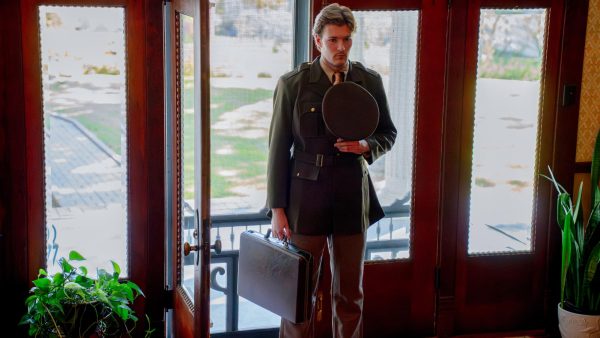
The story of “When the Azaleas Bloomed” comes from a collection Willeford calls the “Jack Lebeaux Stories,” which tell of Jack Lebeaux, a Texan World War II pilot returning home to his ailing father and plans to sell his family’s land, discovering that his childhood friend has moved on without him.
“I just started writing a whole bunch of short stories, kind of an anthology sort of thing about individual events that happened in his childhood and leading up into his adulthood,” Willeford said.
At first, Willeford wrote “When the Azaleas Bloomed” as a short story for a competition with the English department during his freshman year, which he won. Shortly after taking a screenwriting course, his story was further developed and entered its script form to be filmed someday, and he now sees his work grandly come to life.
Jennifer Prediger, an experienced filmmaker and professor at SMU’s film department, taught Willeford in one of her courses and offered feedback throughout his story’s development, praising his skill and vision.
“Translating that into a screenplay required him to embrace visual storytelling, to externalize emotion through action and image, shaping an active protagonist with clear goals and emotional stakes,” Prediger said.
“He’s been incredibly dedicated to rewriting and refining. His discipline and care for his characters show. Good screenwriting is rewriting, and Jake embodies that truth with heart and humility.”
Callum Morrow, Willeford’s friend, classmate and executive producer for the film, immediately recognized his hard work ethic and passion.
“He’s very loyal to his projects, he takes a lot of time with everything that he does. I make fun of him for being a try-hard,” Morrow said jokingly. “He doesn’t seem to really have limits… which I really appreciate about him. That’s why I’m supporting the feature film that he’s doing.”
Because the story takes place in and around the World War II era, there are already concerns about how it will be handled when it comes time to film.
“Since it’s a period piece and it takes place in the middle of nowhere, that’s automatically a logistical issue,” Willeford said. “There’s a whole bunch of different aspects of logistics that are going to be challenging, and we have to get the budget for them.”
The Summer Film Production’s budget relies on the director and producers to find the resources to fund their film, from grants to crowdfunding. This method allows students to experience building a movie from the ground up in every aspect. Fortunately, the Division of Film and Media Arts will match funding in a 1-to-2 ratio toward whatever the students can raise.
Willeford and Morrow both intend to ensure this production is known throughout campus, not only to start laying the groundwork for funding the film but also to spread awareness of the film itself.
“I want to get the word out number one for money because we need money. But number two— a college produces a feature film. I feel like that should be more of a thing, and everyone should know about it,” Willeford said.
Worries aside, Willeford’s determination and locked-on vision reassure those around him that this feature film can reach its highest potential. The film’s script, after all, is a character-driven story with deep emotional themes, which isn’t usually found in student writers.
“Jake’s storytelling reflects both a reverence for cinema and a personal connection to Texas,” Prediger said. “He brings a poetic, contemplative sensibility to his work. He’s drawn to stories rooted in memory, family and ordinary lives.”
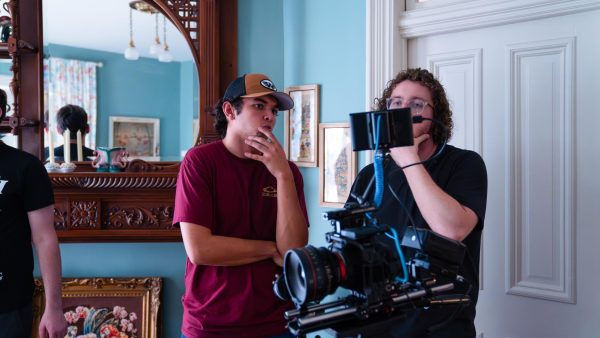
In early November, the rest of the core production team for the film was officially chosen and announced to move the project forward. Joining Willeford and Morrow are Adam Carley as Associate Producer, Liz Ginkul and Brianna Gapsiewicz as Producers and Brian Dashner as the film’s Director of Photography.
Both Morrow’s and Willeford’s personas radiate eagerness and readiness to start this production. With many short films under his belt and even experience from working as an assistant camera on the last summer feature, “Egg Drop Soup,” Willeford feels more ready than most to tackle this immense project.
“We’re going to have 4,000 posters on every wall. You’ll see it at some point. Really, I just want to shout it from the rooftops. We’re making a movie essentially, and I want it to be an event [because] it’s a really important thing… not just for me but for this campus,” Willeford said.
With this pivotal moment in his academic journey, Willeford hopes to shine a light on the film department, which he believes doesn’t get the attention it deserves, wanting to show more people the creative work being done.
“The film is going to be good— that’s a fact,” Morrow said. “I know that, and I wouldn’t be working on it if I didn’t. I know that Jake is going to brute force it whether any of us want to or not.”
Significant progress has already been made, as the production team has begun location scouting and shot a proof-of-concept, which will be used to promote their film, showcase their vision and secure further funding and talent.
“Making a feature film in undergraduate school is a feat, and one of the great parts of SMU’s Film and Media Arts program,” Prediger said. “Jake set his sights on being selected for the Summer Film Production, and his hard work is paying off.”
“I’m excited to see this movie come to life and what he makes next, as his voice and vision continue to develop.”