

Voting felt simple for SMU senior Sofia Anderson back in her hometown of Santa Barbara, California, where ballots automatically arrived in the mail. In Texas, there is no physical envelope at her fingertips.
Anderson began looking into the voter registration process in Texas. She said her experience consisted of scrolling through voter registration websites looking for deadlines, forms and eligibility rules, but she struggled to find clear directions.
“I mean, I tried,” Anderson said, “But I was just really confused.”
Anderson couldn’t figure out if she could be registered in two states at once. She didn’t know what address to use while she was living in a dorm. She was unsure whether it was worth registering at all, since her post-graduation plans might take her out of Texas.
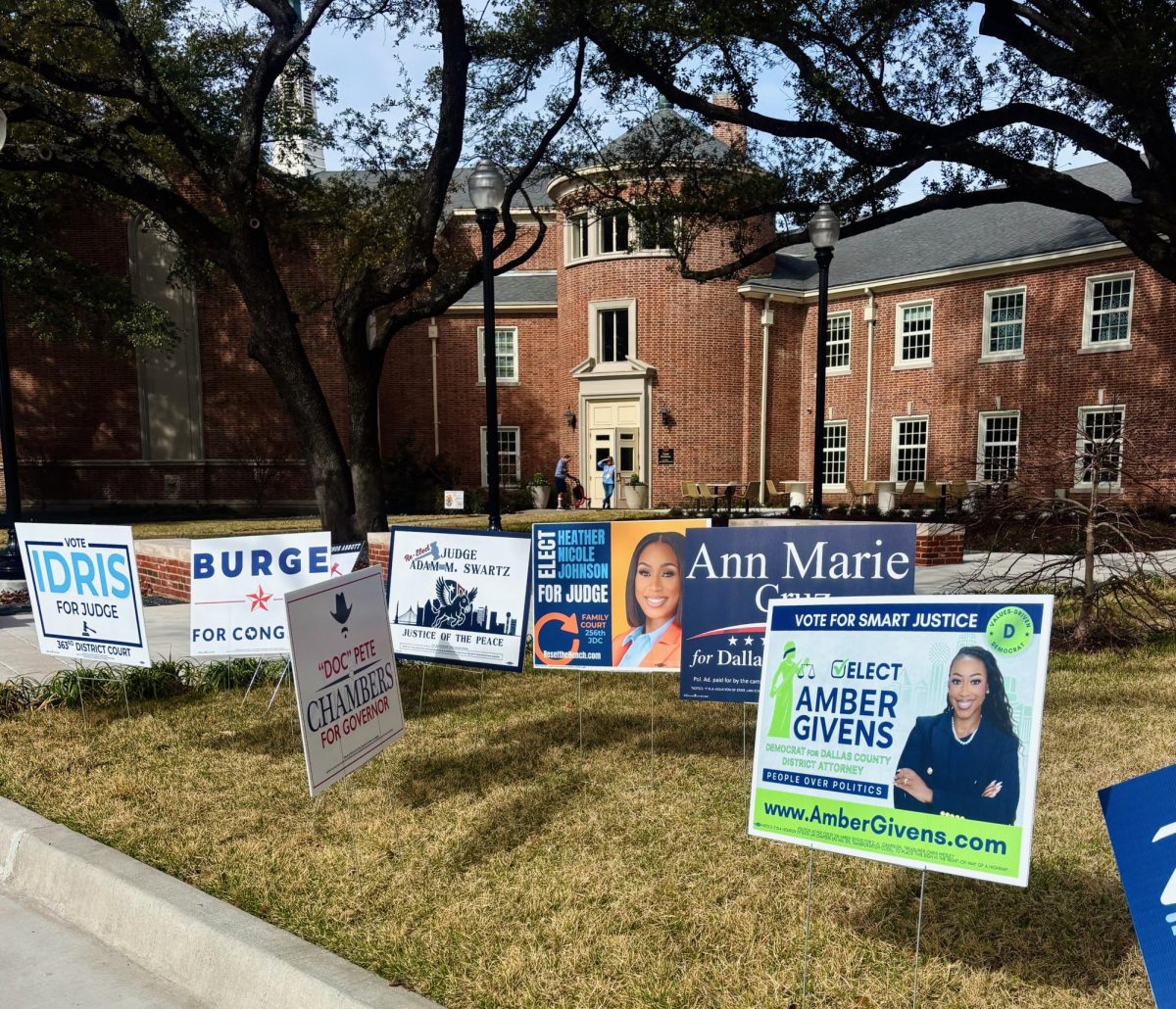
The Texas primary election takes place on Tuesday, March 3, and will decide who advances to the November 2026 midterm election. Up for vote are seats in the U.S. Senate and the Texas House of Representatives. These races could affect policies related to higher education, healthcare and housing, which can affect college students across the state. Extensive registration rules, voter ID confusion, limited campus guidance and social media messaging can make it difficult for SMU students trying to figure out where and how to cast their ballots.
That disconnect, according to SMU political science professor Calvin Jillson, is one of the most consistent obstacles for college voters.
“The voter registration process can be confusing, particularly if you’re not at home,” Jillson said.
Anderson’s experience is not necessarily unique, as reflected in past data from the 2022 midterm election. According to the U.S. Census Bureau, 39.6% of Texans ages 18 to 24 were registered to vote in November 2022.
The statewide voting trends were reflected in an informal small survey of 25 SMU students conducted this week. Just days before the primary, 60% of respondents said they were not registered to vote in Texas, and 52% said they are unsure of where or how to start the process.
One of the hurdles, getting to the polls, was once easier for SMU students.
“There used to be voting precincts on campus. There aren’t anymore,” Jillson said.
Texas lawmakers introduced the H.B.3144 bill this past year that prohibits the presence of a polling station on campus grounds unless the institution is closed for the day that voting takes place.
“There are sort of active attempts to make it difficult for young people to vote, particularly in Republican controlled settings like Texas,” Jillson said. “Young people tend to break almost 2-to-1 Democrat, so you don’t want to facilitate the voting of your opponents.”
Research conducted by the University of Houston Election Lab found that many Texas county election websites lacked clear information on the voting process, which can contribute to voter confusion in the state. Similarly, 75% of respondents from the SMU student survey said that clearer information or on-campus registration booths would make them more likely to participate.
Social media adds another layer of complexity to the disconnect between college students and voting. While it can connect students to political news, it also contributes to the denigration of politics and the voting experience in general, Jillson notes.
“The sheer amount of information is definitely fatiguing,” said Zach Frank, a junior political science major. “On social media, which I feel like is obviously a relatively new phenomenon, you’re just berated with political messaging all day. I don’t really know how to interpret everything.”
Historically, voter turnout has been lower among young people, especially in local and state elections.
“Voter turnout is about twice as high among 55 to 65 year old people as it is 18 to 25,” Jillson said.
As people get older, mortgages, schools and taxes serve as constant reminders of how local and state elections can directly impact them. In contrast, college students are fairly new to the process.
“Sometimes it’s intimidating to go vote for the first time,” Jillson said, “You don’t know if you have the right ID, and you have to show it. Then, you go to the voting booth and 80% of the names on the ballot you do not know.”
For students like Anderson, not voting isn’t necessarily indifference; it’s uncertainty. Without a ballot arriving in the mail, clear campus guidance, or a break from misleading political messaging on social media, registering and voting can easily become another task pushed aside by classes, work and post-graduation plans.
“If you’re busy, but understand the process, you find a way to do it,” Jillson said. “Yet, if you’re busy and don’t understand the process, you tend to be more intimidated by it.”