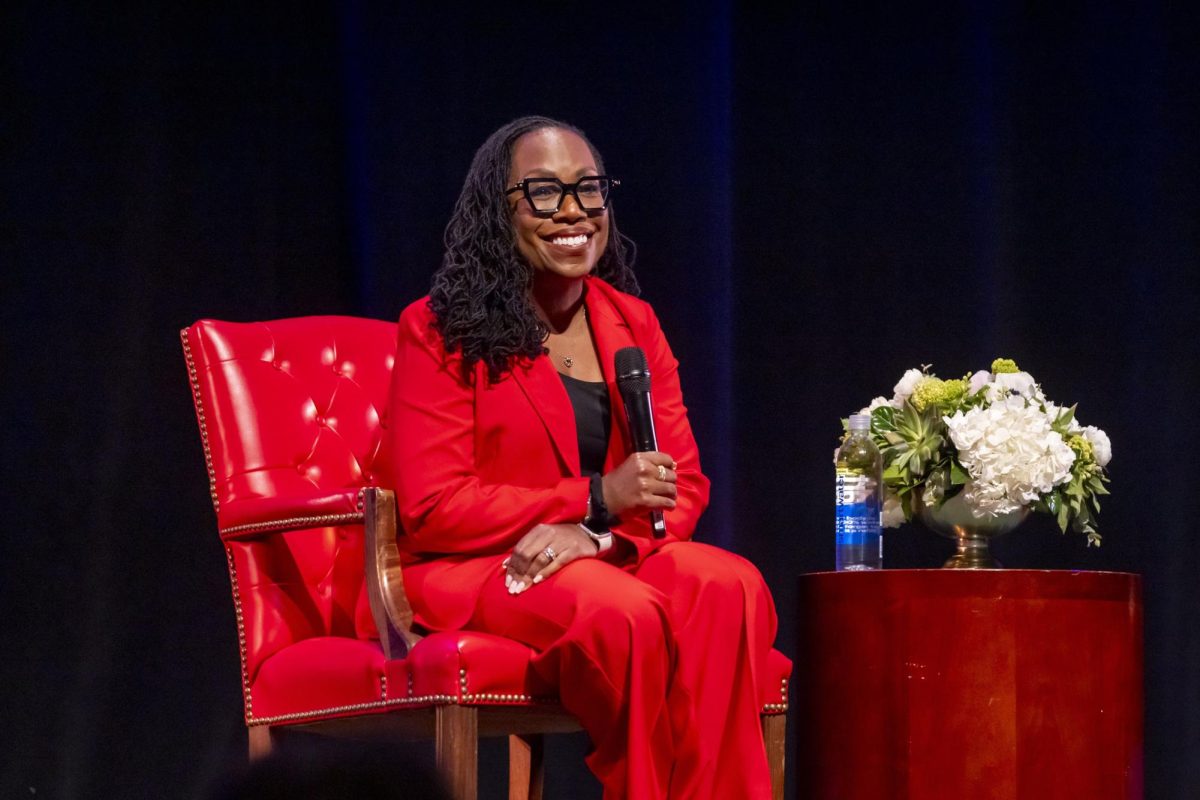



On Tuesday, Dec. 9, attendees gathered in the McFarlin Auditorium for SMU’s final Tate Lecture series of the semester, featuring Mick Ebeling.
Ebeling is a producer, innovator and CEO of Not Impossible Labs, a studio that uses accessible technology to solve human problems and change lives.
“Our entire object was to just help people. And that’s what we did,” Ebeling said in an exclusive interview with The Daily Campus. “And we’ve been doing that now for almost 15 years.”
What started as a date night with his wife turned into the moment Ebeling launched his company.
In 2009, Ebeling attended an art exhibition where he saw a paralyzed graffiti artist who had been bedridden for seven years. The artist, Tony ‘TEMPT’ Quanwho, was diagnosed with ALS in 2003.
Inspired by Quanwho’s father and brother, who were unable to talk to him, Ebeling was determined to assist the artist.
After gathering a team of programmers and coders, they invented the world’s first low-cost eye-tracking device, The Eyewriter, that allowed Quanwho to make art again with his eyes.
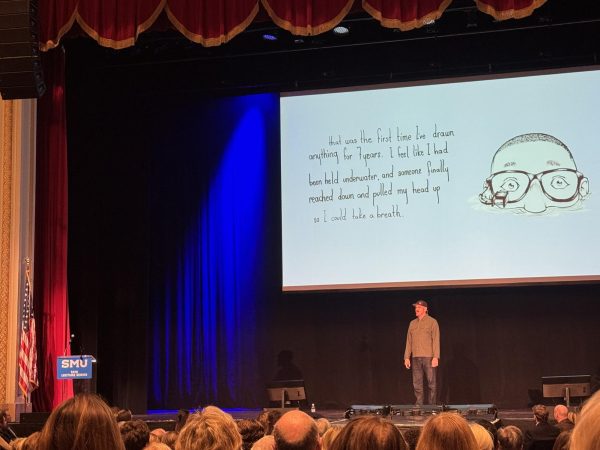
“We woke up one day and this thing had just gone crazy,” Ebeling said. “It was Time Magazine’s top invention, TED Talks and permanent collection at the MoMA, all of these things. But it woke up in me this desire of ‘What if we used technology to help people but then gave it away?’”
The Eyewriter was the first project that transformed into the creation of Not Impossible Labs, leading to many more projects and innovations to come.
Without any credentials or diplomas, Ebeling and his team have now created multiple different kinds of technological yet simple inventions to solve human issues, all starting with one story.
“There was no strategy. We just wanted to help this one dude, and we helped him,” Ebeling said.
The mantra “Help One. Help Many,” is the way his team goes about changing the world through technology and how Not Impossible Labs can create the highest impact
Ebeling explained that solving a huge global problem, such as homelessness or hunger, can feel overwhelming. But when the focus is narrowed to one person, the problem suddenly becomes solvable.
“If you tell the story of that one person, then other people can see what you have done,” Ebeling said. “They immediately will have access to seeing themselves in that story.”
For his next project in 2013, Ebeling ran across an article about a 14-year-old boy named Daniel, who lost both arms in a bombing in the Nuba Mountains in Sudan.
“When he woke up from surgery, the first thing he said was, ‘If I could die, I would because now I’m going to be such a burden to my family,’” Ebeling said, calling that moment the spark behind Project Daniel.
The team built him a 3D-printed prosthetic that let him feed himself for the first time in two years. Most prosthetics cost $15,000, but Daniel’s cost $100.
By training local residents, the project has continued producing arms for hundreds of amputees in Sudan.
“When you see something that’s absurd, when you see something and you say, ‘That’s not right. The world shouldn’t work that way,’ you commit. And then you figure out how the heck you’re going to pull it off,” Ebeling said.
Richard Warfield, a criminal defense lawyer in Dallas and SMU alumnus, regularly attends the Tate Lecture series and reflected on Ebeling’s work.
“He is an example of how just doing something for somebody can make a difference in that person’s life,” Warfield said. “I’m a criminal defense lawyer, so I kind of do that for a living, helping people in a really bad spot in their lives. You can make a big difference.”
Ebeling stressed that Not Impossible Labs works with communities, not for them.
“If you’re designing for someone and you don’t understand their world, the odds are high you won’t get it right,” he said. “We start with ‘not impossible.’ There’s no business plan. There’s no strategy. We just kind of, you know, jump and we start going.” Ebeling said.
But while his human-centered approach resonated with many in the audience, others questioned how sustainable his model really is.
“I felt like he was an individual driven by the challenge of being able to say, ‘I did it,’ as opposed to making the long-term impact in those areas,” said Darcy Zarubiak, managing director of RoVolus LLC in Dallas. “It didn’t seem like he had the business plan to go and perpetuate that into society, where it could change society, like he wanted to do.”
Not Impossible Labs has gone on to create more projects, like a sound system that helps blind skateboarders ride safely, new tools to help clear landmines in Ukraine, a food-delivery program for families who need meals and wearable devices that let deaf people feel music and even help with Parkinson’s tremors.
“This whole thing of ‘impossible’? It’s a fallacy,” Ebeling said. “It’s a temporary state of being that is begging, that is yearning. It’s inevitable. It’s going to transition from impossible to possible.”