

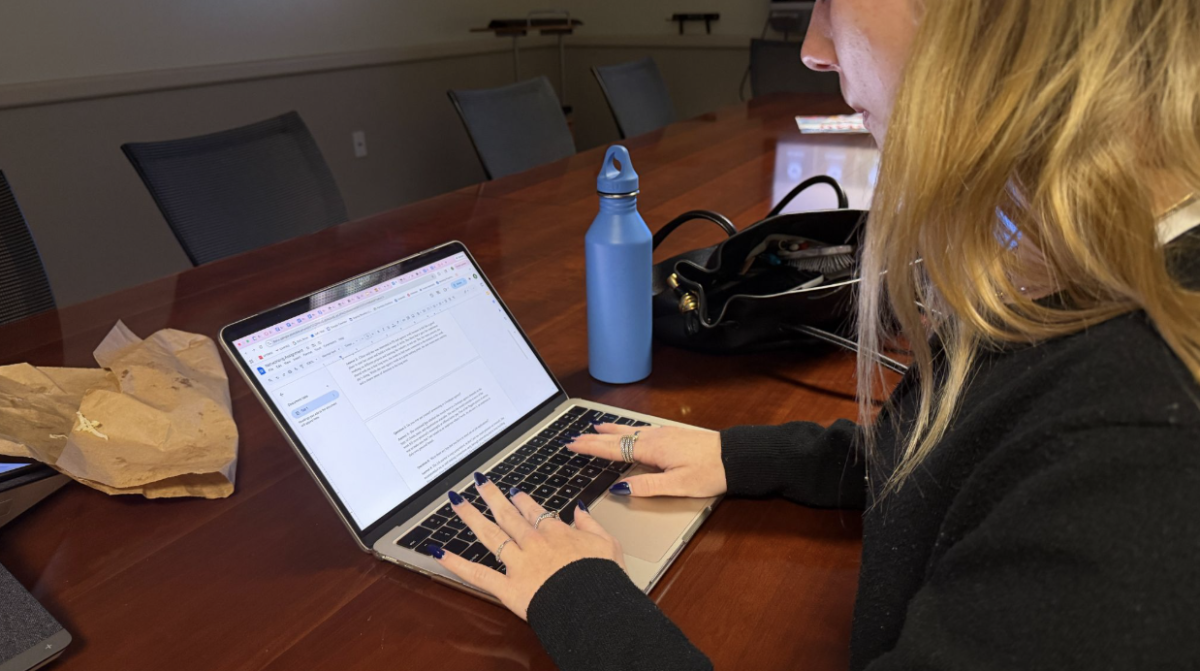
Staring at a computer screen full of open tabs and half-written essays, junior Sophia Dinubilo sits and waits for her motivation to kick back in. She has been working on school assignments for three consecutive hours, with no end in sight. For Dinubilo, the end of the semester feels like a race she can’t slow down.
“I just feel like I have too much to do and not enough time to get it all done,” Dinubilo said. “I just don’t have the mental strength to push through sometimes.”
For students at SMU and beyond, burnout has shifted from being associated with midterms and finals to being a constant part of college life. With academic pressure, extracurricular involvement and future career expectations rising, some students are struggling to keep up.
Since the COVID-19 pandemic, students are facing higher levels of academic stress. A post-pandemic study from Rutgers Medical School reported academic stress as the leading cause of poor mental health, often citing changes in course loads and expectations post-pandemic as a factor.
Six years later, senior staff psychologist with SMU Counseling Services, Abel Tomatis, Ph.D., has seen this impact locally.
“Since COVID, we’ve seen a steady increase in the number of students seeking counseling services,” Tomatis said.
Tomatis encourages students who are experiencing burnout symptoms at SMU, such as chronic exhaustion and difficulty concentrating, sleeping and staying motivated, to take advantage of the outreach programs that SMU provides and counseling services like one on one mental health care and the health center’s relaxation room.
Symptoms of burnout show up in students’ everyday routines. Constant late nights studying, scattered focus and a constant feeling of being behind eat into their everyday.
For Dinubilo, burnout comes down to time, or the lack of it. Between classes, being a student athlete, her job as a nanny and preparing for her upcoming internship in London, her schedule leaves little room to slow down.
“It’s just kind of a lot of juggling moving parts,” Dinubilo said.
The pressure intensifies at the end of the semester, when academic deadlines overlap with social expectations.
“You want to spend as much time with your friends as you possibly can, but also finish everything academically,” Dinubilo said.
Other students across campus are experiencing the same feelings. Sophomore Amaia Murphy balances a full course load, a leadership role in her sorority, Alpha Kappa Alpha, various campus organizations, including the Mustang Band and a part-time job. Even though she enjoys all she does, the constant demands leave little room for rest.
“I’m definitely spread thin,” Murphy said. “There are some areas that I would like to invest more of my time and energy into, but I’m just not able to.”
She feels a lot of academic pressure to be able to perform well and strive to do better than her previous semesters. A lot of that pressure comes from within, but the constant feelings of stress can counteract her goals to perform her best.
“I don’t sleep enough, and I think that sets me up for failure some days,” Murphy said. “I’ll be so tired sometimes that I’ll fall asleep in the middle of a lecture.”
Amidst the number of students fighting constant stress, senior James Verhoeven had reached the breaking point of burnout while trying to complete his course load in time for graduation.
During the fall 2025 semester, he took on a heavy academic load of 18 hours of math-based courses, all while balancing his part-time job. He took time off from his involvement in student organizations to focus on academics, but the pressure was still overwhelming.
“I was feeling so overwhelmed that all of my grades started dropping,” Verhoeven said. “I had three Fs and two Ds. It was looking like it was going to be damaging to my college career.”
Despite his initial goal to graduate that December, he ultimately dropped courses to recover.
“I realized that burnout is very real and very important,” Verhoeven said. “I thought I could do everything, and in reality, the burnout was getting to me really bad. Dropping those two classes ended up saving my mental health.”
Despite their different experiences, all three students describe the same underlying issue of trying to do everything and trying to do it well, but feeling overwhelmed.
“There is definitely a cutoff point where your plate becomes full and it starts to break the plate,” Verhoeven said.
When left unchecked, burnout can lead to long-term consequences in academic ability and mental well-being, which is why students are increasingly taking advantage of resources available on campus.
Murphy turns to campus resources like working out at the Dedman Recreation Center or taking a trip to the health center’s relaxation room to power-naps in their massage chair.
Dinubilo tries to balance out her busy schedule by still making time for her friends and family, even at her most overwhelmed.
“Even if I’m super stressed about schoolwork, I’m not gonna stop myself from hanging out with my friends,” Dinubilo said. “They help me take my mind off the stress and anxiety of school.”
Connecting with her community has been the best way to remind her she’s not alone in feeling overwhelmed and that she has an outlet in those moments.
Verhoeven tries to create meaningful relationships with his professors and reach out to them when he’s struggling.
“A lot of professors will work with you,” Verhoeven said. “They’re not your enemies.”
Students across campus are doing the same to continue supporting themselves through times of stress, even if that means reaching out for support. While this reflects a growing need for campus mental health services, it also means there is greater awareness around mental health on campus and more students feel comfortable reaching out.
One of the biggest barriers for students who need support on campus is the stigma around mental health. For students, acknowledging that they are struggling and asking for help can be one of the hardest steps to take, but Tomatis said that SMU is actively working to break down these barriers and reduce the stigma through providing education and resources.
“Feeling overwhelmed doesn’t mean you’re failing; it usually means you’ve been carrying too much for too long,” Tomatis said. “The first step is simply telling someone you trust, such as a friend, professor, advisor or counselor.”
Even though burnout has started to feel like routine for a lot of students, there are endless ways to manage those high levels of stress on campus and beyond. As the spring semester winds down, the pace on campus shows little sign of slowing. Libraries stay full, deadlines stack up and students continue to push to the finish line.
“Sometimes it can feel like too much,” Dinubilo said. “But it’s important to take it one day at a time.”