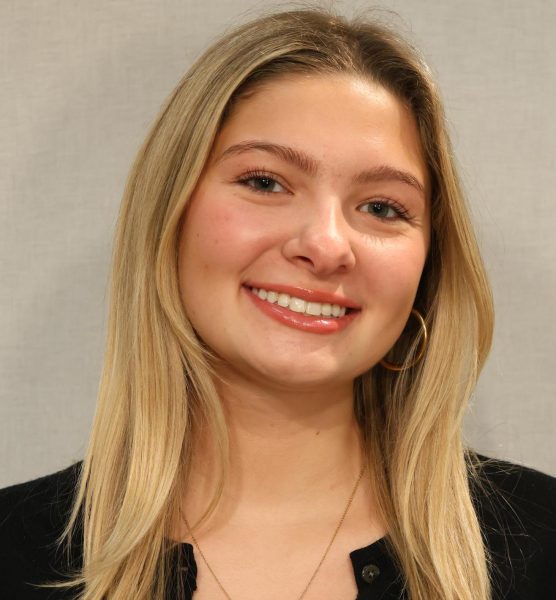



For this year’s Student Senate elections, The Daily Campus’ editorial team decided to continue interviewing student body officers in a panel, an effort that was implemented last year to share each candidate’s campaign platforms, increase voter turnout and transparency within Student Senate elections.
Candidates were interviewed by various members of The Daily Campus’ Senate Election Board, which comprises Melanie Jackson (Editor-in-Chief), Gianna La Fond (Managing Editor), Chloe Casdorph (Photo Editor), Sophie Bergmann (General Assignment Reporter and Sophia Pardo (General Assignment Reporter)
This year, only the race for Student Senate secretary is contested, yet across each category, each candidate received the same set of questions in a question-and-answer format to maintain balanced and fair reporting.
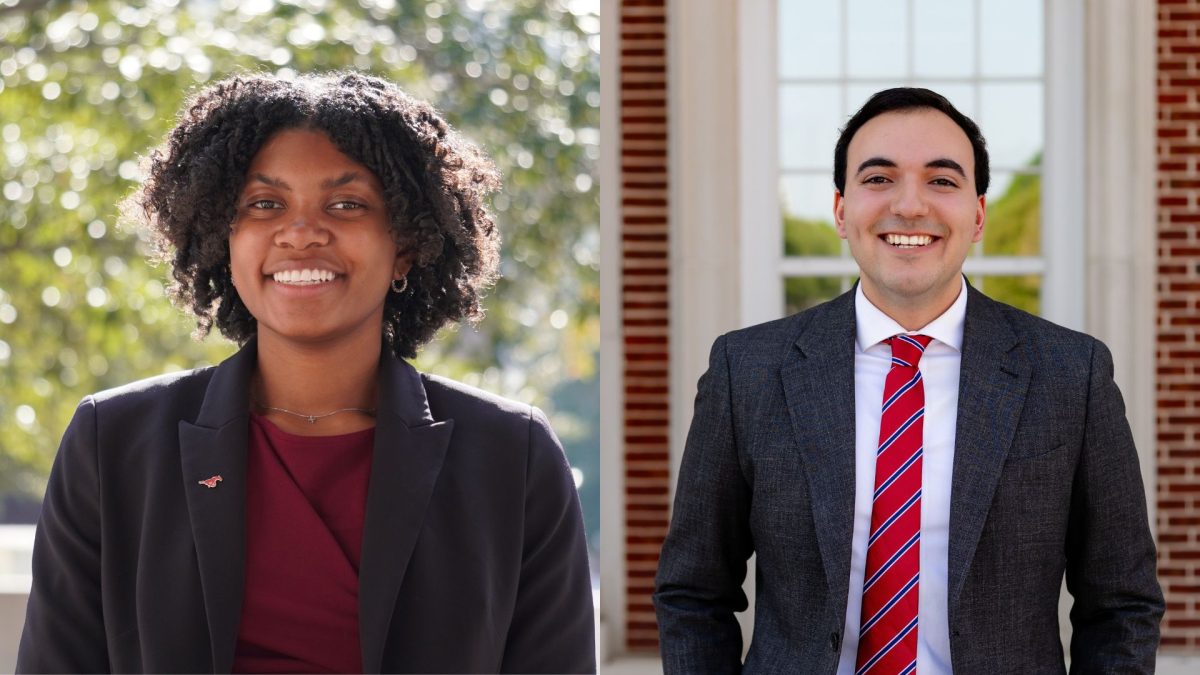
Kellen Phair

Phair is a rising junior studying finance who currently serves as a pre-major senator.
The Daily Campus: Describe yourself in three words.
Kellen Phair: In three words, I would say, attentive, organized and committed.
DC: If elected, what initiatives and policies do you plan to introduce?
Phair: I think the role of secretary, it’s very well defined compared to some other roles, so I think that we don’t really need to redesign the wheel, in a sense, but I think that there’s kind of two main aspects that the secretary can really help out with. I think execution within Student Senate is a really good one, and with that comes efficiency and then the other one is the code of conduct committee. The secretary oversees the committee of the student code of conduct, and we can offer revisions to the code of conduct each year. It hasn’t been done in the last couple of years, but I do like what past secretaries have done, where they’ll put out a poll and allow students to recommend what changes they think should be made, and then, from that, they can bring those changes.
I think that there are some current flaws in the code of conduct, for example, right now, there’s incentives for the code of conduct to give out fines and give out violations to students. For example, for alcohol cases, it’s a $100 fine per incident, and those go directly into the budget. So, it’s kind of interesting where they’re incentivized to hand out the violations in order to help their budgets next year. Things like that are issues that need to be brought up, which happens at the end of each year, so I think that is a big topic for the campaign. But overall, as far as being efficient and executing in senate, I think that it is important to support the initiatives that the senators and that the new president and vice president have so that I can really be a stepping stone and really be a supportive person for them, in order to have their visions come to reality.
DC: What do you believe is the biggest issue facing the SMU community right now? How do you hope to bring change to this issue?
Phair: For the senate, something that we’ve been talking about is shared governance with the new administration. It’s definitely been a hard transition. A lot of the legislation that we’re passing in the senate right now is urging the administration to do things, versus deployable action that the students can. So I think that, as far as my role as secretary, by being more efficient, we can focus our senate resources and focus our senate time on legislation and goals and initiatives that the Student Senate can actually accomplish without having to just beg the administration. We can also try to work better with the administration to really pass along the things that the students desire.
DC: When the university’s new strategic plan is implemented, what specific steps would you take to ensure student input and involvement?
Phair: I think that’s kind of the same thing I was talking about, that’s been an issue because our voices and the students’ voices have been very strong, and there has been pushback from the administration. I think that the solution to that is to try to work with them and try to get aligned voices. Instead of Student Senate rising up and having an external ‘This is what we should do,’ it should be more of an internal ‘This is how the students are feeling, how can we pass legislation that reflects that without seeming combative?’
DC: What excites you most about the opportunity to serve in this role? What impact do you hope to make?
Phair: I wish it were a role that supported students more directly, but really, it’s a role that supports senators and other exec members in order to have their goals and their initiatives and enables them to do their job more effectively and efficiently. Doing that allows for more productive senate sessions, more productive governance and a more productive shared governance. I think it really makes a direct impact on the other senators and the other exec members.
Keaton Steen

Steen is a rising sophomore studying political science and economics with a minor in public policy and international affairs, who currently serves as a first-year senator
The Daily Campus: Describe yourself in three words.
Keaton Steen: Well-rounded, I think people would say that I take a variety of perspectives into account when I make a decision and that I’m very well-versed in different areas of campus. I would say outgoing. I’d say there’s no project too small, there’s no idea too small to make a reality and I would say citizenship. From the time I was very little, I always cared about citizenship and what it means to be a good citizen and what it means to contribute to the places that have made you who you are, and that’s why I’m running for secretary.
DC: If elected, what initiatives and policies do you plan to introduce?
Steen: My campaign is action-oriented. It’s about taking what we have and making it better. I think the role of Secretary can be summed up as the communicator of senate, the collaborator of senate and the organizer of Ssenate. As far as communication goes, I want to have greater transparency. I think we have a lot of speakers coming to senate, advertising The Daily Campus, advertising various things, but sometimes we don’t understand what’s going on with certain decisions, for example, the December commencement cancellation. We as senators understand, but I want to encourage senators to use the mechanisms I’ll put in place to disseminate that information better.
On organization, I think having our projects in line and having everything set out, because, as secretary, I’m basically in charge of the internal affairs of the senate. So I think having everything set out, having templates for legislation, having project groups coordinated in a centralized way will help everyone advance their projects. On collaboration, I want to do a better job of collaborating with our directors in senate. I think we have a lot of underutilized roles in senate, and if we have everybody work together more, we’ll be more effective.
Besides those three points, one thing I’m especially proud of and looking to continue is when I ran for first-year senator, I said the fact that we have to pay for printing is a problem; nobody likes it. No one likes paying for anything, but everyone, even if you’re printing a 20-cent essay, everyone thinks it’s unfair that we have to pay a minuscule amount for an essay when we already pay a lot for the university. So I heard people have that concern, and then [Tuesday], a resolution I authored passed, advocating for the administration to allocate money per student to be used for printing. I think as secretary, I will have the platform to encourage that being implemented and not just spoken words that are never acted upon.
DC: What do you believe is the biggest issue facing the SMU community right now? How are you hoping to bring change to this issue?
Steen: I think the biggest issue facing the SMU community right now is how we navigate our growth. I think growth is a very good thing, but it’s the kind of thing that you have to navigate in a responsible way. I think a lot of the things and the controversies you’ve seen in senate this year have been people not liking change being made or feeling that change doesn’t advocate for their interests. As secretary, my job will be to communicate what happens in senate to help address student concerns in a real way and help them understand why decisions are being made so that they can either advocate for a different solution or just not like what’s going on. But I think how we address growth in a productive way is the biggest issue facing the SMU student body.
DC: When the university’s new strategic plan is implemented, what specific steps would you take to ensure student input and involvement?
Steen: I think we already have a lot of good things in place. We have [Student Representative to the Board of Trustees], we have senate, all these things. I think making sure that we don’t regulate the student voice out of fear that the administration won’t listen is an important thing. My mentality is that in Student Senate, we are responsible for addressing student concerns. Students elected us. It’s our responsibility to advocate for their concerns and to speak [for] the student voice. So I think my job as secretary would be to enable people to have that voice.
DC: What excites you the most about serving in this role? What impact do you hope to make with it?
Steen: I think the most exciting thing about serving in this role is probably the printing project. A lot of times in senate, we talk about internal issues that are abstract, or you don’t really know how they affect you as a student. With the printing project, it’s something that day-to-day students encounter, and day-to-day students would appreciate a solution that is actually put in place. So I think in this role, the role of secretary is a unique one where you have responsibilities, but you also have a lot of flexibility on the executive committee to pursue projects. I think as secretary, I would be excited to fulfill the duties of the role while pursuing projects that actually address day-to-day students.