

For this year’s Student Senate elections, The Daily Campus’ editorial team decided to continue interviewing student body officers in a panel, an effort that was implemented last year to share each candidate’s campaign platforms, increase voter turnout and transparency within Student Senate elections.
Candidates were interviewed by various members of The Daily Campus’ Senate Election Board, which comprises Melanie Jackson (Editor-in-Chief), Gianna La Fond (Managing Editor), Chloe Casdorph (Photo Editor), Sophie Bergmann (General Assignment Reporter and Sophia Pardo (General Assignment Reporter)
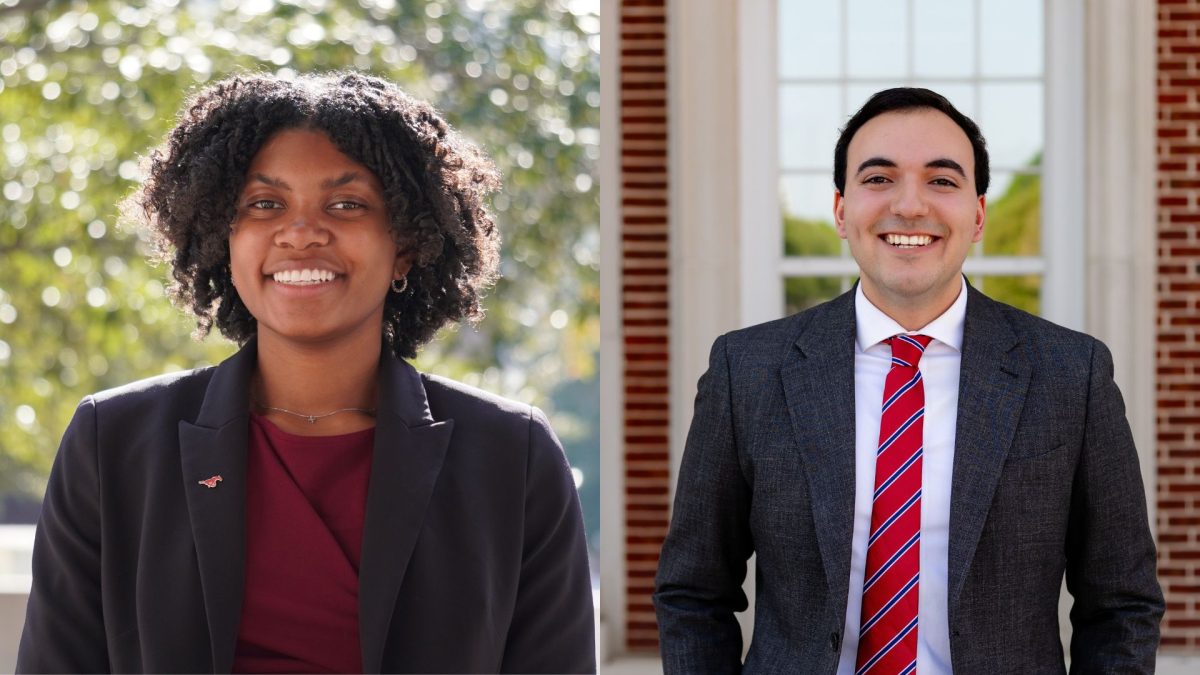
This year, only the race for Student Senate secretary is contested, yet across each category, each candidate received the same set of questions in a question-and-answer format to maintain balanced and fair reporting.
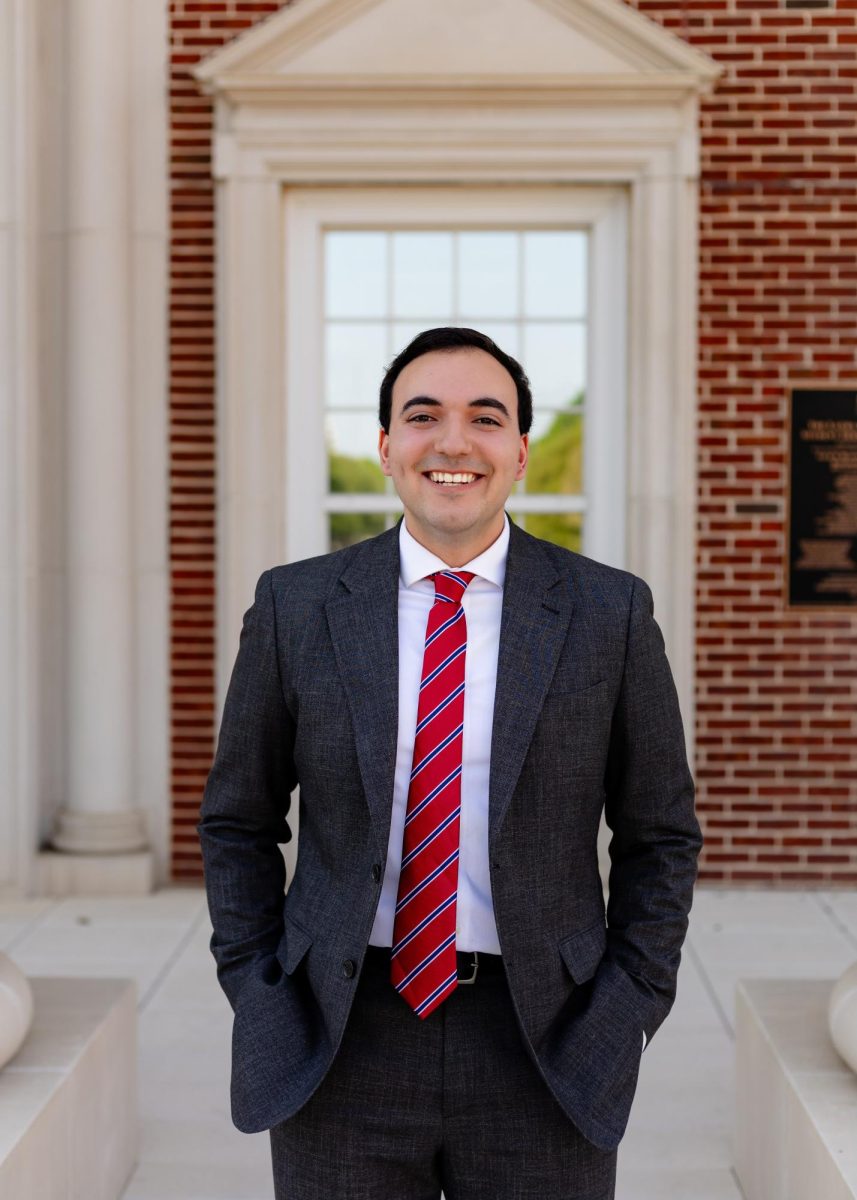
Owen Bartosh Bartosh is a rising junior studying marketing and public policy who currently serves as a Cox senator.
The Daily Campus: If you could describe yourself in three words, what would they be?
Owen Bartosh: I would say the first is a hard worker. I really do try to focus on getting things done, not thinking of just ideas, but actually taking those ideas and turning them into results. I think we’ve gotten to do a lot of that in senate. I’ve passed many pieces of legislation, the most out of any senator that I know of, a lot of stuff there.
I would also say listener is another way I would describe myself. I think it’s really important to get things done, that you are able to hear from all sides and in a lot of the projects I’ve worked on, that’s what’s gotten them to go further. One of the things I’m very proud of is, I lobbied the Cox [School of Business] administration to get the building hours opened to no longer close at 10 p.m. on weekdays, but at midnight on weekdays, because I noticed a lot of my constituents were like, ‘Man, we’re getting kicked out of the building.” Throughout that process, it took a lot of listening to different parties to figure out, ‘Okay, what’s the best solution?’ and we were able to get that done.
So definitely hard worker, listener and then the last thing I would say is pragmatic. I really do think there is value in understanding what can be done and what can’t be done. What the Student Senate can do, and choosing to focus on pursuing things we can do. I know a really big issue, and one of the big issues of my campaign, is parking. It’s a huge problem among students here, but there are a lot of things, unfortunately, that we just can’t do. There was some recent legislation that had a good spirit behind it, but it was beyond the scope of what senate could do. I’m really trying to focus on solutions that are possible.
One of those is increasing the parking counters outside of garages. I don’t know if you have seen those, tells you how many spots are open Not every parking garage has those and not every open lot has those. But if we can get that, then maybe you don’t have to spend an hour circling that parking garage and say ‘Oh nope it’s full.’ I’m gonna talk with the OIT department about building maybe an app, or a part of the website or some sort of student service where if you’re a commuter and you’re 10 minutes out, you can see exactly which garages are open and which are closed and find a parking spot easier.
Those are practical solutions that the Student Senate can do and can tackle, and that really plays into that pragmatic, realist perspective that I like to take on things.
DC: If elected, what initiatives and policies do you plan to introduce?
Bartosh: In addition to the parking problem, I think there are four things that I’m really trying to focus on. I’m calling my platform the “Bartosh Blueprint,” because really, it’s about building things up. How can we build and find solutions to our big issues? Like I said, the first one is parking, and those solutions like increasing the amount of counters and potentially building out a software where students can access that off of campus.
Another one is creating scholarships through Student Senate that honor and reward students for their hard work. Something that I’m really proud to have done in conjunction with a fellow senator this past year was [to] create a new senate scholarship. It’s the first time we’ve done it in a long time. But I also understood that we don’t want to take money from student fees to fund just one student. So we were able to fundraise almost all of that scholarship from outside sources. That really addresses a lot of different problems, like the increases in tuition.
Also, we really want to focus on enhancing our school spirit. As we do really well in athletics, it’s important that we acknowledge and highlight all our athletes. Recently, we have the NCAA diving champion [Luke Sitz]. That’s amazing. What are ways that the senate can help put him on a bigger stage? Maybe it’s through a proclamation, maybe it’s through a social media post, things like that, but open to exploring things like that to help make sure all of our athletes are highlighted and really rewarded for their hard work.
Finally, supporting our student organizations. They are the lifeblood of student life at SMU. Something that I’m really interested in exploring is potentially offering free graphic design services or photography sessions for our student orgs, especially our newer ones that maybe say, ‘Okay, well we don’t have anybody that can make a Canva graphic.’ Maybe they’re a new org. I know that was a lot, but that’s pretty much an overview of what the blueprint is, and we’re really excited to get started on that.
DC: What do you believe is the biggest issue facing the SMU community right now? How do you hope to bring change to this issue?
Bartosh: Right now, SMU is in a time of great transition and great change. Something I’ve been very, very passionate about is maintaining our identity as a student body, and maintaining our school culture despite that change and with that change. Something I worked on, really, really proud to have done this past year, was passing the ‘Pony Up Proclamation.’ The change from ‘Pony Up’ to ‘Go Mustangs,’ I felt, was very unpopular among a lot of the student body, and so me and another senator spearheaded a project to really solidify and say, ‘Hey, wait, this is something that we like, let’s keep this.’ I think going forward, as a lot of new ideas are coming, a lot of great ideas are coming to SMU, new changes in the law school, new building projects, things like this, I want to focus on how can we maintain the really good parts of SMU’s school culture and the student body experience. I would say the biggest problem facing the school right now is, what do we keep, what do we not keep? My goal is to identify and preserve the traditions that make SMU what it is.
DC: When the university’s new strategic plan is implemented, what specific steps would you take to ensure student input and involvement?
Bartosh: Something that I’m really, really passionate about, and it’s been featured in [The Daily Campus’] ‘Student Senate in a Minute,’ is this concept of sharing the governance. Historically, SMU has operated in a way where the Student Senate and the student voice is equal with the faculty voice, is equal with the administration’s voice. I know that there have been some students and the board involved with this new strategic plan, but I think it’s very, very important that the leaders and as vice president of the student body, you are in a position to advocate for things that a lot of my peers are just not in a position to do.
I am committed to making sure that we, the student voice, [are] in the rooms where the strategic plan is being implemented. We may not get a choice on what’s in that, but we can get a choice in how that is implemented. I’m committed to making sure that we are in those rooms. I think I have a history of being able to talk to administrators and also being able to say, ‘Hey, we don’t like this.’ And it’s not whether I like it or I don’t like it, but it’s the people that I represent. That’s another core part of who I am and what I seek to do, so again, being able to find a way to maintain that concept of sharing power within the university is a goal of mine.
DC: What excites you the most about the opportunity to serve in this role? What impact do you hope to make?
Bartosh: I really, really enjoy my time as a senator. I’ve had a lot of fun, gotten to do a lot, but I’ve really been focused on representing my 300 constituents in Cox. I mean, it’s a very narrow group, great group. But I am ready to tackle more campus-wide issues, so that’s what excites me most: being able to hear from a wide variety of places and represent new people and an expanded constituency. I’m a double major in [Dedman College of Humanities and Sciences]. I also have a minor in music, so I’m in [Meadows School of the Arts], so I’m already all over the place pretty much. I’m excited to finally be able to represent everyone and make decisions that are on behalf of the whole student body.