


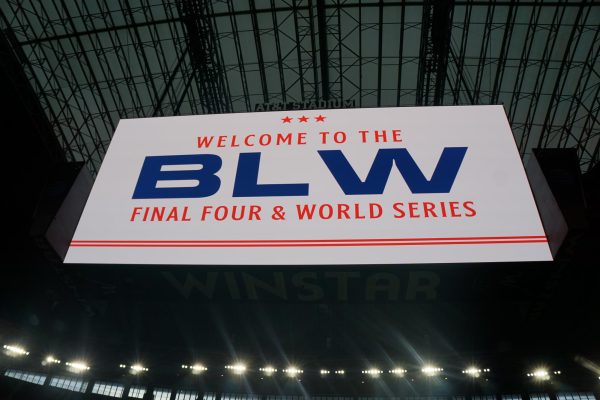
When most kids envision playing at AT&T Stadium, home of the Dallas Cowboys, they’re adorned in silver-and-blue uniforms, a football in hand as they dash to the endzone for a touchdown on Sunday Night Football.
SMU freshman Logan Rose got his first chance to play at the famed stadium in 2024. As he stepped onto the gridiron of America’s Team, Rose did so for a different Dallas franchise– the Dallas Pandas, one of the first professional wiffle ball teams in the country.
“We went from our backyard to AT&T [Stadium],” Rose said.
Early in his childhood, Rose found himself swinging the thin, yellow wiffle bat as often as his normal baseball bat. His father, who won a Wiffle Ball World Series in 1995, would challenge Logan and his younger brother Carson to matches on a field he built in their backyard.
“We’d call it the Rose Classic,” Carson said. “We had one every season, and it would be my brother and I against our dad. I guess it was probably unfair, but it was two-on-one.”
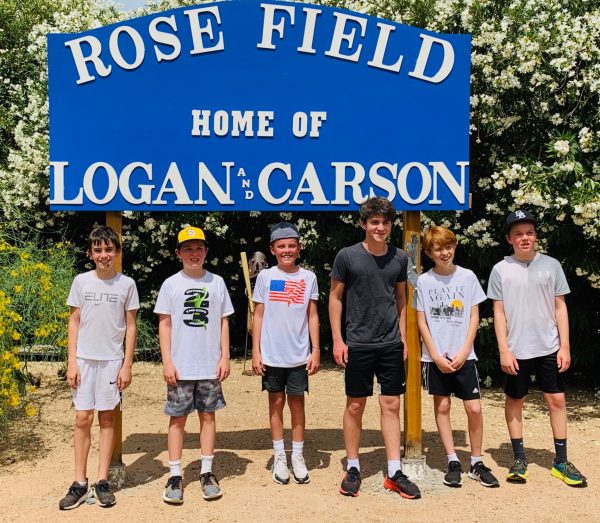
The brothers may have been outmatched against their dad at seven and nine years old, but those memories sparked an idea for Logan when the COVID-19 pandemic occurred. Fans of the popular trick shot YouTube group Dude Perfect, Logan and Carson began uploading videos of themselves playing wiffle ball in 2019, and then later formed a four-team league with their hometown friends.
“Logan and I were thinking about, ‘Hey, how can we make this bigger?’” Carson said. “We contacted a bunch of our close friends that had played baseball or just friends from school. It was four teams to start, probably about 20 guys and that’s pretty much the start of it.”
And thus, Big League Wiffle Ball was created.
The backyard league exploded in the following years, gaining popularity on social media and earning financial backing from high-profile stars, including actor Kevin Costner and entrepreneur Gary Vee.
“Two of [the BLW teams] are league-owned, so we still want to keep those for the future, but the rest took an investment,” Logan said.
The league is up to 10 teams, including the Dallas-based team that rosters both of the Rose brothers. The Dallas Pandas are sponsored by Dude Perfect, the DFW-based YouTube group that once inspired Logan and Carson to make videos of their own.
“If you were to ask me what my favorite moment from Big League Wiffle Ball would have been, [meeting Dude Perfect] would’ve been it,” Carson said. “I showed Tyler [Toney] one of my videos of me doing a little trick shot when I was seven years old. It’s just been insane being able to throw against some of my childhood heroes, and just being able to meet these guys that I honestly never thought I’d be able to meet.”
It wasn’t until 2025 that BLW established itself as the first “professional Wiffle Ball league,” keyword ‘professional.’ Major League Wiffle Ball is widely regarded as one of the first mainstream leagues, currently going on 17 seasons strong, and others like AWA Wiffle Ball and Como Blitzball have found success on YouTube, too.
But Logan is setting BLW apart with an entirely new model. In the upcoming season, players will sign professional contracts to be paid to play in the league. The strategy created a mass exodus of players from other leagues to BLW. Jordan Robles, one of the top wiffle ball players in the country, joined for the financial benefits.
“I’ve always followed the money,” Robles said. “The bigger the cash prize, the more I’m going to hone in and focus on what that is. If you’re skilled enough to be a professional player and get offered a [BLW] contract, you will be compensated for your time, your travel will be entirely covered as well.”
Robles has been a star in the competitive wiffle ball scene for years, winning his first tournament in 10th grade. Since then, he has erupted onto the scene for leagues such as Mid-Atlantic Wiffle and MLW, even winning the 2025 MVP for MLW.
Then, on April 10, 2026, MLW released a documentary on Robles’ career– and his retirement from MLW. Robles moved on to BLW, and as part of his contract, signed an exclusivity deal with the league.
Robles said that he agreed in his exclusivity clause to not play in other leagues, including MLW, that are run as businesses and could provide competition to BLW.
“These are leagues that are a league, but they profit,” Robles said. “The players may not receive profits from that, but some individual with these leagues does. BLW doesn’t want their guys to make money for someone else, and I think it would be unintelligent for a player to put money in someone else’s pocket before they put money in their own pocket.”
For Robles, a high school physical education teacher and varsity baseball coach, the security provided by his contract is essential.
Professional tournaments with cash prizes have become increasingly common in wiffle ball. Robles and the Rose brothers compete in them frequently, traveling across the country to face people firing wiffle balls at over 100 miles-per-hour.
At most of those tournaments, the winning team would receive the money, while others would go empty-handed. With BLW, the money is guaranteed.
“In wiffle ball, only the winning team gets paid,” Robles said. “So you go to a tournament with 50 teams, there’s only one out of 50 teams walking out of there with money and happy.”
Logan hopes to capitalize on the rising popularity in a league format. Over the summer, BLW will play the 2026 regular season in Georgia. Prior to the season, BLW held an inaugural draft, for which over 100 players competed for a mere 16 roster spots.
After the 2026 season, there are already plans to expand the league to accommodate the interest from high-level players across the country.
Although Logan never anticipated the league reaching this point, he now sees the potential behind it, especially with the massive growth other sports have experienced, including pickleball.
“Because everyone has a familiarity playing [wiffle ball] growing up… I don’t see why we can’t utilize that to grow the sport and say this is the next thing,” Logan said.
In February, Logan was named to the Forbes Local Arizona 30 Under 30 class of 2026, which included professional sports stars such as Arizona Cardinals tight end Trey McBride and Phoenix Suns guard Jalen Green.
Logan has helped secure partnerships with Fanatics for jerseys and with ESPN for broadcasting rights. BLW has an official website equipped with merchandise sales, statistics, sponsorships and even a dedicated blog. He’s had to balance his first year at SMU with running a fully operational ten-team league, which he admitted hadn’t always been easy.
“It was a tough first semester, and obviously, what we’re doing this summer is taking a lot more effort,” Logan said. “It’s not just single events we’re doing across the country. We have this whole season in Atlanta, we’re making a run of show, we’re doing sponsors, we’re doing all of these activations. That definitely takes a lot more time.”
Logan, perhaps fittingly, chose SMU for its strong sport management program. He’s taking Legal and Ethical Aspects of Applied Physiology and Sports Management this semester, which he said has appropriately pertained to the contract negotiations he’s been handling for BLW.
“That’s probably the closest thing I’d say to where I know some of the stuff already,” Logan said. “I’m not an expert at all, but there’s some things that’ll be in class and it’ll pop up and I’ll be like, ‘Oh, I saw that before.’”
The 2026 season is set to be the league’s biggest yet, with all games streamed on ESPN+ and ESPN2. Even with all of the sport’s momentum at his back, Logan still finds himself musing over ways to improve the league that once started in his own backyard.
“We’ve got a really good opportunity to revamp the sport in a way, and we’re going to test out that model this summer,” Logan said. “It’s indoors, it’s very high tech. We’re going to have a DJ going the whole time. I think with the venue we have, why not throw some music on and see if that resonates with people, but we’ve got a couple years to test it out.”