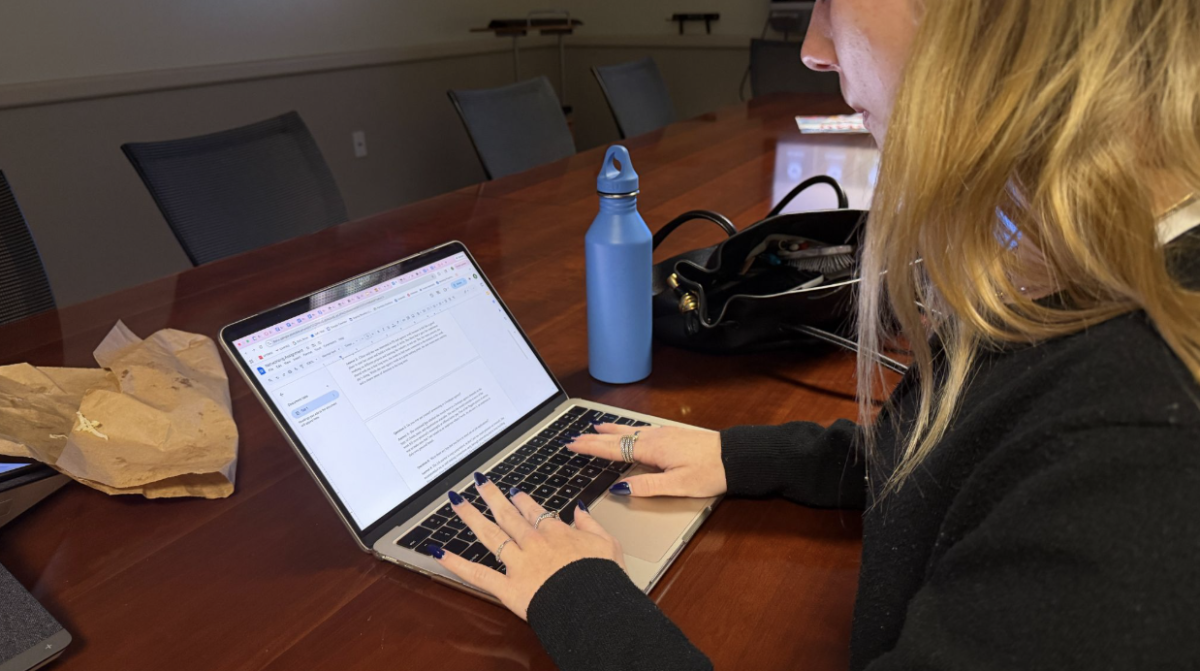



Mid-October means midterm season has arrived at SMU. Typically, tests are given surrounding Fall Break, leaving students wondering where the best study spots are, how to stay focused and where to go for tutoring.
We asked SMU students what questions they had about studying for midterms. Using SMU resources and expert studies, we tracked down the answers.
Are there any resources on campus to help us prepare for midterms?
SMU offers various resources for effective test preparation, including a set of instructions to create a 5-day test prep plan that can be adjusted to fit your time frame and needs. There is also an essay prep plan to help you build a successful essay.
Beyond this, SMU offers tutoring sessions at the Altshuler Learning Enhancement Center, located at Loyd All Sports Center, Suite 202. No appointment is needed, and the schedule is published on their website.
Some midterms require students to develop their writing skills, and the university’s writing center is there for that. Offering a variety of resources to help you improve your research, critical reading, writing and presenting skills. Its operating hours can be found on their website. They are open all week, but weekend sessions require previous registration.
Lastly, students are encouraged to utilize the professor’s office hours, review sessions, and seek supplemental instruction.
Does SMU offer tutoring for advanced courses through the study centers?
Yes, SMU’s A-LEC provides free tutoring for advanced courses through its team of upper-level undergraduate and graduate student tutors. A-LEC tutoring is available at no charge to SMU undergraduates, and no appointment is necessary. Check the A-LEC website for the course tutoring schedule.
Where is the best study spot on campus if I need a low but not silent noise level? I have trouble studying in my room, but everywhere seems to be crowded during midterms.
The SMU Libraries website is a great resource if you need to find all the available spots to study on campus. While Fondren Library is not at maximum capacity during construction, there are a bunch of other great libraries to study at if you need quiet. Bridwell Library’s Methodist Collection Reading Room, right behind the main desk, is the quietest study area in the library.
Hamon Arts Library’s second and third floors are both very quiet areas with study rooms that can be reserved for added privacy. One side of the library is also filled with natural light pouring in through its floor-to-ceiling windows, making it a great place to people-watch as well.
In Fondren, the second-floor Centennial Reading Room is such a quiet study area, you can hear people unzipping their bags. It works for people who need silence while working. The fourth floor of Fondren is the quietest, but there is not a lot of seating, so your best bet is to go at odd hours.
Underwood Law Library’s third floor is quiet; it is located in the law school, at the top of campus, behind Dallas Hall.
Hughes-Trigg is also a convenient place to study, with lots of seating and food options. Some areas, such as the second floor, aren’t too loud but quiet enough at certain times of the day to focus.
Do I need my SMU ID to log into Lockdown Browser?
According to the SMU Office of Information Technology, you do not need your physical student ID, however, you will need to know your my.SMU login, netID and password.
What is the best way to manage all of the material from the semester so far?
According to Debra Shapira, a learning skills specialist at SMU, students should begin studying at least five days before their midterm to avoid pulling an all-nighter. Use an A-LEC Test Prep worksheet to plan daily study blocks and organize material either chronologically or by difficulty. Review notes and textbooks thoroughly each day, and test yourself by reciting what you’ve learned, if you can’t explain it, review it again. If you feel overwhelmed, seek help early from A-LEC tutors or your professor. In the days leading up to the exam, eat well, get enough sleep, exercise, and take time for something enjoyable to stay focused and reduce stress.
What is a tactic I could use to stay focused when I am prone to being easily distracted?
According to The University of Virginia, techniques students can use to stay focused when they are prone to distraction include using the pomodoro method, prioritizing good sleep, exercise and nutrition, managing stress and anxiety and incorporating movement breaks.
How can I balance having multiple midterms and still get enough sleep?
According to the National Sleep Foundation, the way to balance multiple midterms and still get enough sleep is to follow a regular sleep schedule, make your sleep environment cool, dark, and quiet, exercise regularly, and be mindful of alcohol, caffeine, and nicotine intake. According an an SMU article on final exam tips, Rebecca Umobong, senior academic counselor at SMU’s A-LEC center says “Final exam week is different from any other week throughout the semester; therefore, it is vital that students plan ahead for when they are going to study, sleep and relax during that week.”
How do I manage stress and anxiety during midterms week?
According to SMU Academic Skill Development, you should make a “self script” to remember during an exam to manage anxiety. In this script, tell yourself to focus on relaxing and getting as comfortable as possible. You studied for the test and know the material, so the test will go well when you are calm. For additional support, seek help at smu.edu/counseling to see a professional.
What are the best study techniques for quick memorization?
You can use Quizlet or physical flashcards as study tactics for quick, easy memorization of terms and concepts. Study consistently to familiarize yourself with the content, and see if you can apply each term to the course material. Make sure you have removed distractions like cell phones in order to speed up the memorization process.
How do you stay focused while doing work if you have a short attention span?
SMU’s Academic Skill Development has videos with tips for concentrating. Tips include stopping your work when you get off track and envisioning a stop sign. According to the A-LEC, recognizing that you’ve lost focus helps you reestablish it before you’ve wasted too much time. Harvard Health Publishing found a direct link between exercise and sleep and attention span. It might be hard to get a full eight hours during midterm season, but they recommend getting as much sleep as possible. Some apps claim to improve focus. Freedom, Cold-Turkey Blocker and SelfControl all block distracting sites and apps.
How do you successfully review every detail of what you’ve already learned that semester?
When doing a comprehensive content review before midterms, many professors recommend organizing class notes and rereading specific parts of course materials, but you can also reach out to professors for their advice on how to study effectively for their classes.
How can we work with professors during busy parts of the semester?
According to SMU’s FAQ page, all faculty are strongly encouraged to offer office hours where students can meet with the professor or teaching assistant during scheduled times or by appointment. Teachers are accessible via their SMU emails and through Canvas. Reach out in advance with questions to give them time to respond.
Where can I find a study group?
While there aren’t any campus-wide study groups, there are ways to get connected on campus for academic support. The First-Generation Initiative, for example, hosts study groups organized to support many different classes. For other students, the best way to find or create a study group is by getting to know your classmates. Often, professors and TAs are willing to help build study groups and will connect students interested in studying together.
How do I balance studying for organic chemistry and biology all at once when they’re all on the same week?
Build a study schedule over the course of two weeks if there are multiple classes you are studying for. Making a full semester planner can be helpful. You can easily dedicate each day to one subject which can be helpful to stay on track and balance your studies.
How do I know if I’m studying effectively or just wasting time?
Check out the Academic Resource Center’s study workshops or visit a tutor who will keep you focused on the task at hand. Different subjects can require different study techniques. Sometimes, Quizlet can be helpful for multiple choice, and websites like Khan Academy can be good for math.
By the time I look up, two hours have passed and I’ve barely made progress. How do people actually focus?
According to the A-LEC, the Pomodoro technique, where you work within 25-minute intervals, can help improve focus and reduce burnout. After completing four Pomodoro cycles, you take a longer break of 15 to 30 minutes. This structured approach helps improve focus by minimizing distractions, preventing burnout by ensuring regular breaks, and building better time awareness.
How do I manage test anxiety?
According to the Mayo Clinic, start with common practices like establishing efficient studying practices, talking to your professor and seeking a professional counselor. It is also important to recognize that “regular aerobic exercise and exercising while studying and on exam day can release tension,” according to the clinic and that getting plenty of sleep is incredibly important for performance in class and on test days. According to the SMU A-LEC, it is also important for students to set doable goals for themselves rather than demanding expectations. Test anxiety is often fueled by the cycle of negative feelings that demands create, according to the center.
Is there a better approach when it comes to pulling all-nighters?
Health Education Services at SMU can be helpful. Sometimes, seeking counseling can provide a different insight as to why all-nighters seem to be an okay tactic for studying. Improving your mental health can be helpful, and asking a professional to help find ways to get a good amount of sleep can be beneficial.
According to Stanford University Student Affairs, all-nighters are brutal in the ways they get in the way of our ability to get things done. They reduce our attention span and ability to focus, slow our reaction time and impair constructive thinking, restrict our creative thinking and innovative problem-solving, and impact memory formation – false memories are more frequently formed when sleep-deprived.
According to the University of St. Augustine for Health Sciences, studying before bed can be effective because the human brain refines and organizes memories. Studying for a few hours before bed and reviewing in the morning is more beneficial than pulling an all-nighter to study.