

Editor’s note: This story was originally published on March 30 and taken down to add additional source reporting.
“The Antipodes,” written by Annie Baker, offers an abstract take on storytelling and the meaning of life that comes off as a convoluted mess. The play aims for avant-garde but delivers a tedious visual anti-story. The 2017 play reached Southern Methodist University, where a student-directed production by Eli Barron opened on March 25.
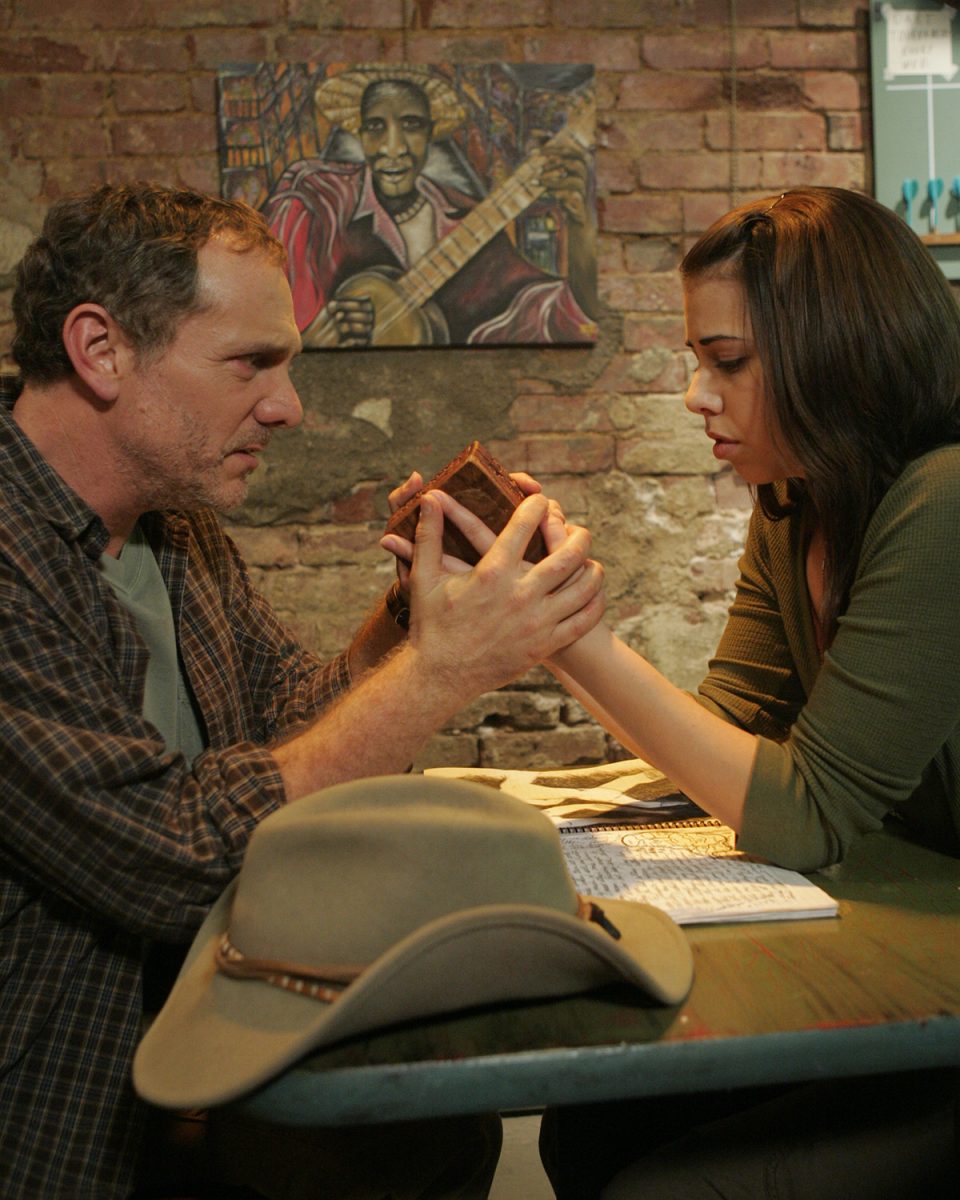
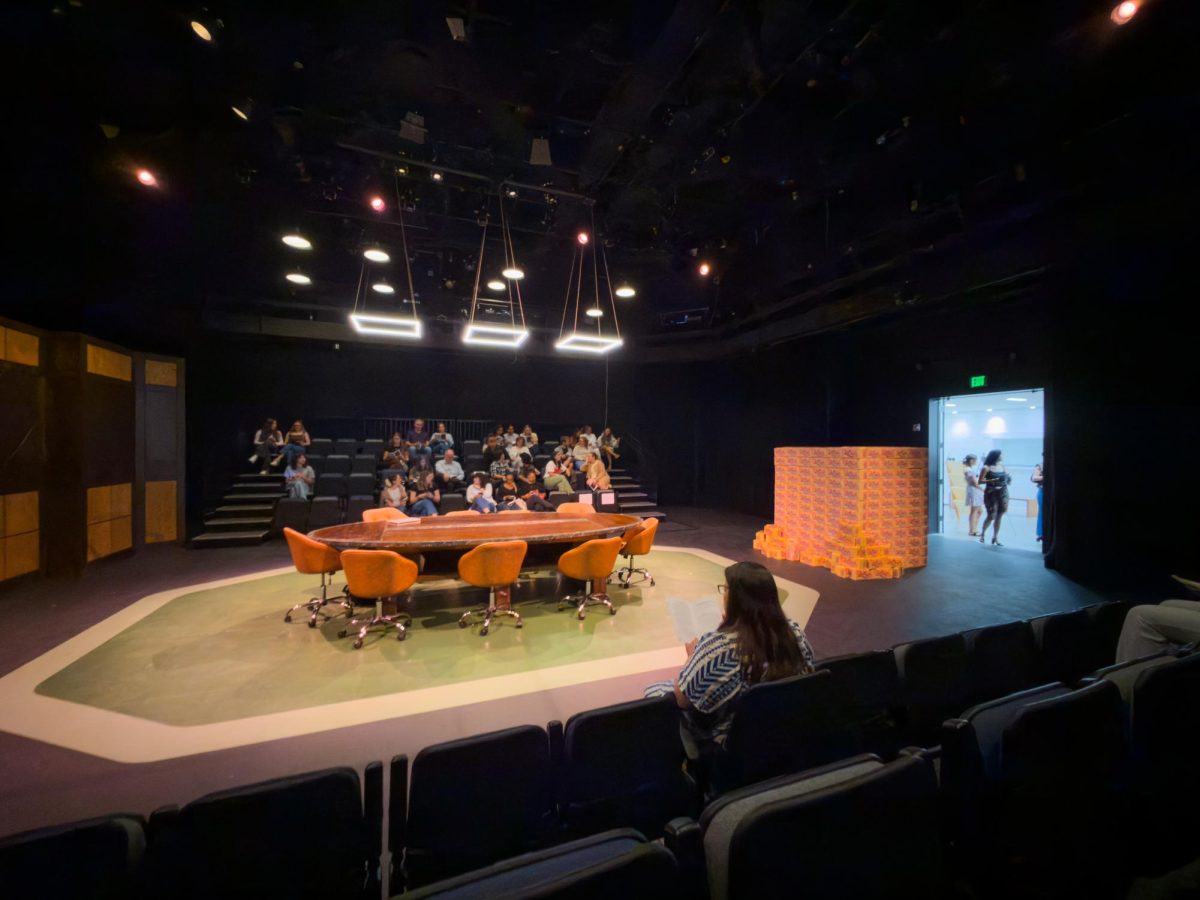
The play centers on a nameless company tasked with creating a great story. Project leader “Sandy,” played by Francisco Grifaldo, heads the effort. The characters’ names hold little importance because the play deliberately stays vague. It never discloses who the workers serve or where they operate, except for a standard meeting room with a center table and chairs that evoke a liminal office space reminiscent of the TV show “Severance.”
The play drops viewers into various meetings as these “office workers” cycle through the pillars of storytelling and myth. The group tries to devise a story that satisfies their high expectations and contributes something meaningful to the world. While the sequence of scenes remains linear, the play never signals how much time has passed. The script does this on purpose to emphasize what the characters discuss rather than any traditional plot, since little action occurs.
Despite my best efforts to engage with the story and settle on what the play was trying to tell me, I struggled to fully grasp the playwright’s argument. The show felt like a poorly wrapped package containing a statement of some substance regarding its overarching theme.
In an interview, the show’s director, Barron, discusses the play’s surrealism clashing with what’s “normal,” the play’s purposeful complexity and the challenges of adapting it.
“It’s still grounded in reality, but there are these elements that come up that really make you question and wonder what the hell is going on,” Barron said. “At the end of the day, it’s a play about a group of people sitting around telling stories, but there’s something moving it forward and gripping them, and it’s gripping the audience as well. So figuring that out was really, really tough.”
What I noticed in the first scenes of the play was that most of the comedy was as crude as it was flat. I got the sense that the few people who consistently laughed during the play were either friends with those involved or trying to convince themselves they were having a good time.
To be fair, many negatives stem from the script itself, which relies on overlapping dialogue to convey realism, long silences and vulgar banter. The unnecessary and sometimes forced cursing feels as if a 10-year-old tried to impress classmates by cursing as often as possible, believing it funnier than it actually was. In the end, the vulgarity made me cringe more than anything. Even I, someone desensitized to worldly vulgarities who easily enjoys films such as “The Wolf of Wall Street,” internally clutched my pearls.
The set design and technical work stood out as the strongest elements of the production. The play’s commentary on modern work-life balance and corporate social hierarchy was interesting. The stack of LaCroix boxes the characters would routinely drink from was a neat, subtle bit of humor that I read to be about the “hip-driven” business environment millennials try to run nowadays.
The consistent, sucking up to the boss gags that we see from the majority of the characters are also slightly amusing, but are hard to fully appreciate with the play’s ambiguous storytelling. While these ideas stand out, the characters and plot fail to make viewers care enough to pay close attention or engage with the messaging, and that leads to the play’s greatest sin—it bored me.
The rest of the cast’s performances were not strong enough to fully overcome the script’s challenges. Although the production slowly reveals characters’ backstories through monologue after monologue as they brainstorm story ideas, the script never intends to present a full picture of who they are. Because of this, it was difficult/hard to feel any camaraderie with the characters. or much chemistry between the characters to root for, nor any strong performances to connect with for the majority.
Some standout performances include Grifaldo as “Sandy,” who played the pitch-group’s boss. He played it with an impressive pompous performance, as the play calls for. Madi Duren as “Sarah” appears briefly, but her role as the office secretary leaves a charming mark with her pandering dismissiveness toward the employees and her catering-to demeanor.
In the end, the play never pays off beyond the message that the world is a mess, modern office life robs people of their individuality and it proves pointless—and equally crazy—to try telling stories amid all this chaos.
As some audience members left mid-show, I felt hurt that the cast and crew would notice them exiting the intimate black-box stage. I felt embarrassed on the crew’s behalf, but I also understood those frustrated audience members.
Say that I didn’t get it, or that the point was to make me feel the way that I do—the experience was not enjoyable, and I feel that my time was not well spent.
Some audience members responded more positively. SMU theater student Kian Ritchie loved the play and has discussed its existential themes in several of his classes.
“[This is] something that I think people should see. And if people go and see it and they don’t like it, you’re always free to leave,” Ritchie said.
Madison McNeely, an acting student in acting, found the production compelling.
“I thought it was really cool,” McNeely said. “I think watching people sit in a room and try to come up with a story that never comes was really interesting.”
It’s unclear why some members of the audience left during the showing I attended, but, as Barron mentions, the play’s subject matter and voice aim to confront and disturb as much as they try to entertain.
“A lot of people did leave…it’s hard not to take that personally,” Barron said. “But I think what this play is offering… It’s kind of tasking the audience with sitting in the room with these characters and being stuck at the table as much as they are.”
The whole theme and closing scene were not lost on me. The play made its point very clear, yet I still asked myself, “What was the point?” “The Antipodes” encapsulates some of the challenges facing modern theater: unnecessary “adult” language for shock value’s sake, dreary monologues, and endings that offer little closure, leaving the viewer less than satisfied.
Chloe Casdorph contributed reporting to this story.